After the Harvest: The Surprising Science of Fruits That Keep Getting Better in Your Pantry
There's a moment every home grower knows well — you pull a piece of fruit off the tree, take a bite, and think, that's it, that's peak perfection. And sometimes you're right. But sometimes you're wrong in the most interesting way possible.
Here's the thing most of us were never taught: harvest day isn't always the finish line for nutrient development. For a surprising number of fruits, the biochemical story keeps unfolding long after you've snipped the stem. The catch? You can either help that process along or completely derail it depending on how you store what you've grown.
Let's dig into the actual science — and talk practically about what this means for the fruit sitting in your kitchen right now.
Two Types of Fruit: Climacteric vs. Non-Climacteric
Before anything else, you need to know about one of the most useful distinctions in fruit science. Fruits fall into two broad categories based on how they behave after harvest.
Climacteric fruits — think apples, pears, peaches, plums, bananas, and tomatoes — produce a surge of ethylene gas after picking. Ethylene is essentially a ripening hormone. It triggers a cascade of internal changes: starches convert to sugars, cell walls soften, aromas develop, and yes, certain nutrients shift in concentration. These fruits are biologically designed to continue their development post-harvest.
Non-climacteric fruits — strawberries, blueberries, cherries, citrus, grapes — don't have that ethylene-driven second act. What you pick is largely what you get nutritionally. Their ripening process stops at harvest.
For home growers, this distinction is everything. It tells you which fruits you can strategically time and store, and which ones you need to eat fast.
The Nutrients That Actually Increase After Picking
Here's where it gets counterintuitive. Most people assume that nutrient content can only decline after harvest — that every day off the tree means less of the good stuff. That's partially true, but it's not the whole picture.
In climacteric fruits, the ripening process that continues in storage involves real biochemical work. Lycopene levels in certain fruits rise significantly during post-harvest ripening. Antioxidant activity in apples and pears can increase as phenolic compounds continue to develop. Some stone fruits show elevated levels of specific carotenoids — the pigment-based compounds linked to eye health and immune function — during the days following harvest.
Pears are a particularly interesting case for American home growers. Most pear varieties actually require a period of cold storage followed by room-temperature ripening to develop their full texture and flavor profile. Bartletts, Boscs, Anjous — they all benefit from this sequence. And during that ripening window, the fruit isn't just getting softer; it's completing a nutrient development process that simply couldn't happen on the tree.
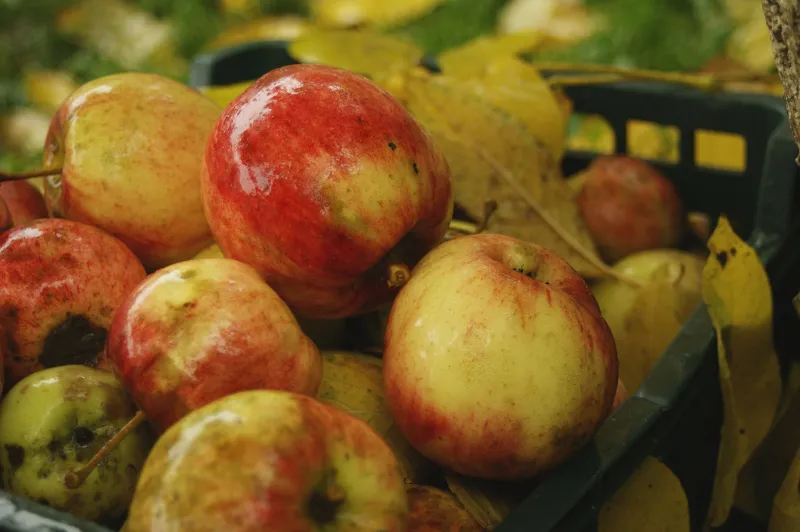
Apples are another example worth understanding. Freshly harvested apples, especially certain heirloom varieties, can be starchy and underwhelming right off the branch. Given a few weeks of proper cool storage, enzyme activity breaks down those starches into sugars and simpler compounds, and the antioxidant profile of the flesh actually shifts toward greater bioavailability.
The Storage Variables That Make or Break the Process
None of this post-harvest development happens automatically or without the right conditions. Temperature, humidity, airflow, and what you store your fruit next to all play a role.
Temperature is the biggest lever. Most climacteric fruits need cool — but not cold — storage to ripen slowly and retain nutrients. Refrigerator temperatures (around 35–40°F) essentially pause ethylene activity, which is useful for extending shelf life but will shut down the nutrient development process. If you want your pears or apples to ripen fully, you need to pull them out of cold storage and let them come up to room temperature (around 65–70°F) before eating.
The practical move: store your climacteric fruits in a cool basement, garage, or root cellar (50–60°F is ideal for most) to slow ripening without stopping it. Then move individual pieces to your counter a day or two before you plan to eat them.
Humidity matters more than most growers realize. Too dry an environment pulls moisture from the fruit, concentrating some compounds but also degrading cell structure in ways that reduce nutrient availability. Too humid and you're inviting mold. For most fruits in home storage, aim for 85–90% relative humidity. A simple trick: store fruit in a breathable bag or perforated container, and place a damp cloth nearby if your storage area tends to run dry.
Ethylene management cuts both ways. Because climacteric fruits emit ethylene, storing them together accelerates ripening — sometimes too fast. Keep your ripening apples away from your pears if you want to control the timeline. But if you have an avocado that's stubbornly hard (yes, technically a fruit), stick it in a paper bag with an apple and watch the ethylene do its thing in 24–48 hours.
Light exposure is often overlooked. Some fruits stored in direct light experience accelerated breakdown of light-sensitive nutrients like folate and certain B vitamins. A dark pantry or cupboard isn't just tradition — it's smart nutrient preservation.
What to Eat Fresh, No Exceptions
For your non-climacteric fruits — strawberries, blueberries, raspberries, cherries, and most citrus — the equation flips entirely. These fruits are at their nutritional best within hours to days of harvest. Vitamin C, in particular, degrades quickly once the fruit is off the plant. Anthocyanins (the blue and red pigments with significant antioxidant properties) in berries begin breaking down almost immediately after picking.
For these fruits, the best storage strategy is minimal intervention: refrigerate promptly, don't wash until you're ready to eat, and consume within a few days. No amount of clever post-harvest management is going to increase their nutrient content — you're just trying to slow the inevitable decline.
A Practical Framework for Your Harvest Season
So how do you put this into practice across a real growing season?
First, know your fruit types and plan accordingly. Before harvest, have a clear idea of which fruits in your orchard are climacteric and which aren't. That shapes your entire post-harvest workflow.
Second, harvest climacteric fruits slightly before full ripeness if you're planning any storage. A pear picked at the right moment of maturity — firm but with a slight give near the stem — will develop better in storage than one that was already soft on the tree. An apple harvested just before peak sugar development has more runway for post-harvest nutrient building.
Third, taste and test regularly. The best tool you have isn't a refractometer or a nutrient chart — it's your palate, used consistently. Taste your stored fruit every few days. You'll start to develop an intuitive sense of when each variety hits its sweet spot, and that sweet spot is usually when post-harvest nutrient development has run its course.
Fourth, don't refrigerate by default. It's the single biggest mistake home growers make. The fridge is a tool, not a first resort. Use it strategically to pause ripening when you need to, not to store everything the moment it comes off the tree.
The Bigger Picture
There's something almost philosophical about the idea that the work of growing isn't finished at harvest. Your fruit is still doing something after it leaves the branch — still converting, developing, completing a biological process that started months ago in the soil you tended.
For home growers, that's actually good news. It means you have more control over the nutritional quality of what you eat than you might have thought. The tree does its job, and then you do yours — not just in the orchard, but in the pantry, the root cellar, and the kitchen.
Store it right, and your harvest keeps giving.