Morning Pick vs. Evening Harvest: How the Clock Inside Your Fruit Tree Changes What Ends Up on Your Plate
Most of us grab fruit when it's convenient — early morning before the heat kicks in, or late afternoon after work. Feels like a minor logistical decision. Turns out, it might be one of the more consequential choices you make in your whole growing season.
Plants aren't passive. They run on internal biological clocks called circadian rhythms, and those rhythms are doing serious metabolic work around the clock. What's happening inside your peach or apple at 6 a.m. is genuinely different from what's happening at 6 p.m. — and that difference shows up in the fruit you eat.
The Plant Clock Is Real, and It's Running Your Orchard
Circadian biology isn't just a human thing. Plants evolved timekeeping systems hundreds of millions of years ago, and those systems coordinate almost everything: photosynthesis rates, stomatal opening, hormone production, and critically, the movement and storage of sugars.
During daylight hours, a fruit tree is actively photosynthesizing — converting sunlight into sugars and pushing those carbohydrates through the phloem toward actively growing tissue, including fruit. As light fades, that sugar transport slows. Overnight, many of those sugars get converted or temporarily stored. By early morning, before photosynthesis kicks back into full gear, fruit is often sitting at a kind of metabolic low point — lower sugar concentrations in the flesh, but with some compounds at their peak.
Then the sun comes up, and the whole engine restarts.
This cycling isn't uniform across all compounds, which is where it gets genuinely interesting for growers who care about flavor and nutrition together.
What Actually Changes Between Morning and Afternoon
Research coming out of plant biology labs over the last decade has started mapping these daily fluctuations in real detail. Here's what the science suggests is actually shifting throughout the day:
Sugars and Brix levels tend to be higher in fruit harvested during or after peak photosynthetic activity — typically mid-morning through early afternoon on a clear day. The tree has been loading sugars into the fruit all morning, and those levels peak before the heat of the afternoon starts stressing the plant and diverting resources.
Vitamin C (ascorbic acid) tells a more complicated story. Ascorbic acid in plant tissue fluctuates with light exposure and oxidative stress. Some studies have found higher concentrations in fruit harvested in the morning before full sun exposure degrades heat-sensitive compounds. Other research points to late afternoon peaks in certain species. The takeaway: this one is variety-dependent and worth paying attention to specifically in your own setup.
Antioxidant activity, including polyphenols and flavonoids, often spikes as a stress response. Plants ramp up antioxidant production to protect themselves from UV radiation and heat. In some berry crops, this means late-morning to midday harvests capture fruit at a higher antioxidant concentration than early-morning picks.
Volatile aroma compounds — the stuff that makes a ripe strawberry smell like a ripe strawberry — are strongly temperature-dependent. These compounds are more active and more detectable in warmer fruit. A berry picked at noon in July carries a more intense aromatic profile than the same berry picked at dawn. Whether that translates into better eating is partly subjective, but for flavor-forward growers, it's a real factor.
The Heat Problem Nobody Talks About
Here's where the morning harvest argument comes back with force: heat is a serious enemy of post-harvest quality.
Fruit picked during the hottest part of the day carries what's called a high "field heat" — essentially the thermal energy baked into it from sun exposure. That heat accelerates respiration, which burns through sugars and degrades cell structure fast. A strawberry picked at 2 p.m. on a hot Kansas afternoon might be at its aromatic peak in that moment, but it will deteriorate significantly faster than one picked at 7 a.m. and promptly cooled.
For commercial growers, this is well understood. Pre-cooling harvested fruit is standard practice precisely because field heat is such a quality killer. For home growers who are walking their harvest straight to the kitchen or a cooler, the stakes are lower — but still real.
If you're harvesting to eat immediately, chasing the mid-morning sugar and antioxidant window makes sense. If you're harvesting to store, share, or preserve, the early morning pick and rapid cooling approach protects more of that nutritional investment.
Practical Timing Guidance for Home Growers
So what does all this mean when you're standing in your backyard in July trying to decide when to grab your blueberries? A few practical principles:
For berries (strawberries, blueberries, raspberries): Mid-morning — after the dew has dried but before peak afternoon heat — tends to be the sweet spot. You're capturing elevated antioxidant and sugar levels without the field heat penalty. Aim for 9 to 11 a.m. on clear days.
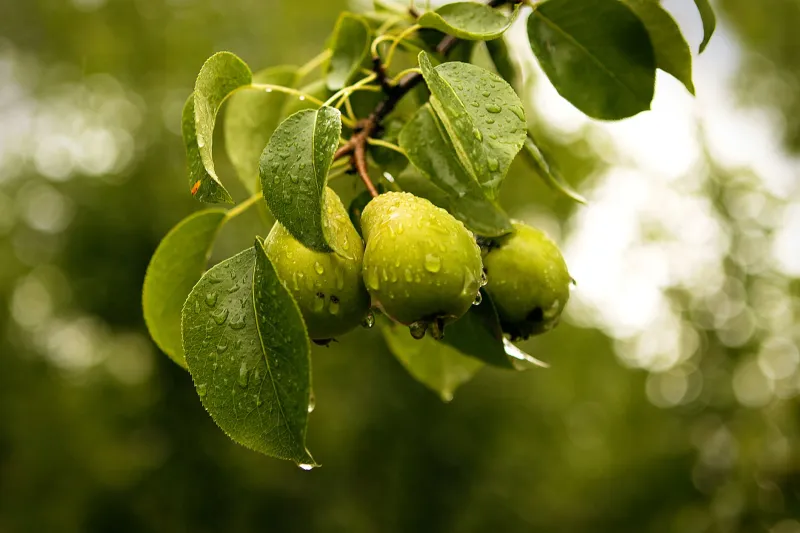
For tree fruit (peaches, apples, pears): Morning harvests are generally safer for quality preservation. The lower field heat gives you more flexibility in handling and storage. If you're eating same-day, a slightly later morning pick on a moderate-temperature day can mean more developed flavor.
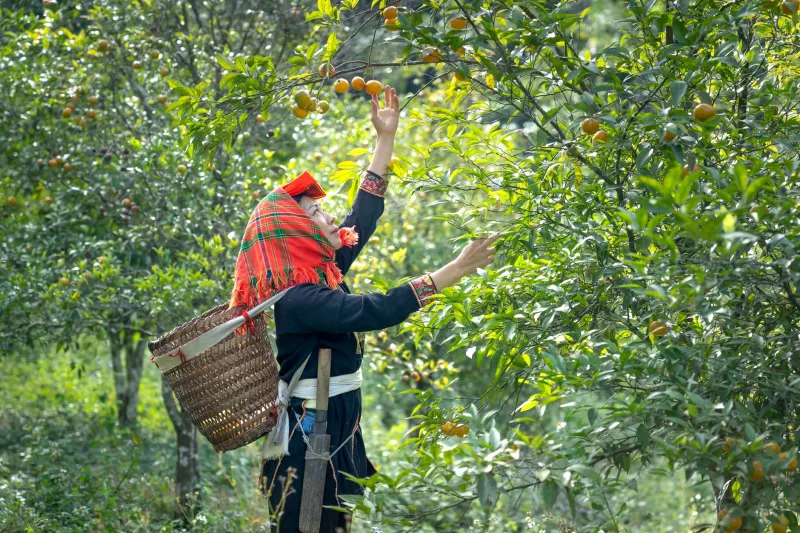
For citrus: Citrus is less sensitive to intraday fluctuations than soft fruit, but Vitamin C content has been shown to be slightly higher in fruit picked earlier in the day before UV degradation accumulates. If you're squeezing fresh juice for nutritional reasons, morning wins.
Watch your weather: Cloud cover dramatically changes the picture. On overcast days, the photosynthetic peaks that drive sugar loading are blunted, and the intraday differences shrink. The timing rules above apply most clearly on sunny, clear days.
Why This Matters Beyond Just Taste
There's a broader point here that connects to what Fruits Campus is really about. When you grow your own fruit, you have a level of control over nutritional quality that no grocery shopper ever gets. Commercial produce is harvested at industrial scale on industrial schedules — logistics, not biology, decide when things get picked.
But when it's your tree, your garden, your morning — you can actually optimize. You can decide to pick your blackberries when the plant's internal chemistry is working in your favor. That's not a small thing.
The nutrient density of homegrown fruit is already higher than most store-bought equivalents, for reasons we've covered elsewhere on this site. Layering harvest timing intelligence on top of that advantage compounds the benefit. You're not just growing better fruit — you're harvesting it smarter.
One Experiment Worth Running
If you're skeptical (healthy instinct), try this: next season, pick a double batch of the same fruit from the same plant — one in the early morning, one in the early afternoon. Taste them fresh side by side. Store equal amounts from each harvest and compare how they hold up over 48 hours.
You'll probably notice differences. Some of them will surprise you. And once you've seen it firsthand on your own trees, the biology stops feeling abstract and starts feeling like a tool you actually own.
Your orchard has a clock. Learning to read it is just another way of growing smarter.