When Sugar Lies: The Hidden Compounds That Actually Decide How Ripe Your Fruit Tastes
You've done everything right. You pulled out your refractometer, held it up to the light, and got a reading that would make any grower smile. The Brix is high. The fruit should be incredible. Then you take a bite, and it's... fine. Sweet, sure. But flat. Missing something. Vaguely disappointing in a way you can't quite put your finger on.
If you've been growing fruit for more than a season or two, you've probably had this exact experience. And it's led a lot of home growers to quietly question whether all those Brix charts and sugar-percentage tables are actually telling them what they need to know.
Spoiler: they're not. At least, not the whole story.
What Brix Actually Measures (And What It Doesn't)
A refractometer measures the refractive index of a liquid — basically, how much light bends when it passes through a drop of juice. From that, you get a Brix reading, which is a proxy for dissolved solids. In fruit juice, most of those dissolved solids are sugars, so high Brix generally correlates with sweetness.
That part is accurate. But here's where growers get tripped up: sweetness and flavor are not the same thing.
Flavor is a multisensory experience. It involves taste receptors on your tongue, yes, but also your nose (retronasal olfaction, to be precise), the texture of the fruit in your mouth, even subtle temperature and astringency signals. Sugar feeds exactly one of those systems. Everything else — the aromatic complexity, the tartness, the way a peach smells like a peach — comes from compounds your refractometer will never detect.
The Acid Balance Nobody Talks About Enough
Ask a sensory scientist what makes fruit taste ripe, and one of the first things they'll bring up is the sugar-to-acid ratio. Not just sugar levels alone — the balance between sweetness and acidity.
This is why a strawberry with a Brix of 9 can taste more vibrant and satisfying than one with a Brix of 14. If the higher-sugar berry has lost most of its malic or citric acid through the ripening process (or through heat stress during the growing season), it ends up tasting one-dimensional. Sweet, but dull. Like fruit-flavored candy compared to actual fruit.
Acid isn't just a counterpoint to sweetness — it amplifies flavor perception. It stimulates saliva production, which helps volatile aromatic compounds reach your olfactory receptors more efficiently. In plain terms: a little tartness makes everything else taste more intense. When it disappears, so does a lot of what made that variety worth growing in the first place.
Volatile Aromatics: The Invisible Majority
Here's a number that tends to surprise people: researchers estimate that somewhere between 75 and 95 percent of what we perceive as "flavor" actually comes from smell, not taste. And the compounds responsible for fruit aromas — esters, aldehydes, terpenes, lactones — are almost entirely invisible to a Brix reading.
Think about the difference between a vine-ripened tomato and a grocery store tomato. Both might have similar sugar levels. But the backyard tomato has a complex aromatic profile built up over weeks of slow ripening, sun exposure, and stress responses that trigger the production of flavor compounds. The commercial one was picked early and ripened in a controlled atmosphere that prioritizes shelf stability over aroma development.
The same dynamic plays out in your orchard. A peach that hits its Brix target three days before it's truly ready may still be missing the full suite of lactones and esters that give peaches their characteristic richness. Those compounds develop late in the ripening window — sometimes in just the final 48 to 72 hours on the tree. Picking too early based on a sugar reading alone means leaving the best part of the flavor behind.
Phenolic Compounds and the Complexity Factor
Beyond acids and aromatics, there's a whole class of compounds that sensory researchers call "flavor modifiers" — phenolics, tannins, and anthocyanins that don't taste like much on their own but dramatically shape how you experience everything else.
In red and purple fruits especially — think plums, dark cherries, muscadine grapes — these compounds contribute to what tasters describe as depth, complexity, or finish. They can create a pleasant astringency that makes the fruit feel more substantial in your mouth. They can also interact with sweetness perception in ways that make moderate-Brix fruit taste richer than high-Brix fruit that lacks them.
Interestingly, many of these phenolic compounds are stress-response products. Fruit that experienced some drought stress, cooler nights, or higher UV exposure during development often has more of them. This is part of why mountain-grown or dry-farmed fruit frequently outperforms heavily irrigated, pampered orchard fruit in blind taste tests — even when the sugar levels are comparable.
So When Is Your Fruit Actually Ready?
None of this means you should throw your refractometer in a drawer. Brix is still a useful data point — especially for varieties where sugar development is a genuine bottleneck, or when you're trying to compare batches across seasons. But it works best as one signal among several.
Here are a few complementary cues that experienced growers and sensory-focused orchardists use alongside sugar readings:
Aroma at the stem end. For stone fruits especially, a fully ripe piece of fruit will smell like itself when you sniff the stem attachment point. If there's no scent, it's probably not there yet, regardless of Brix.
Ease of separation. Fruit that's genuinely ready tends to release from the tree with minimal resistance. This varies by variety, but a hard pull is usually a sign you're ahead of the flavor curve.
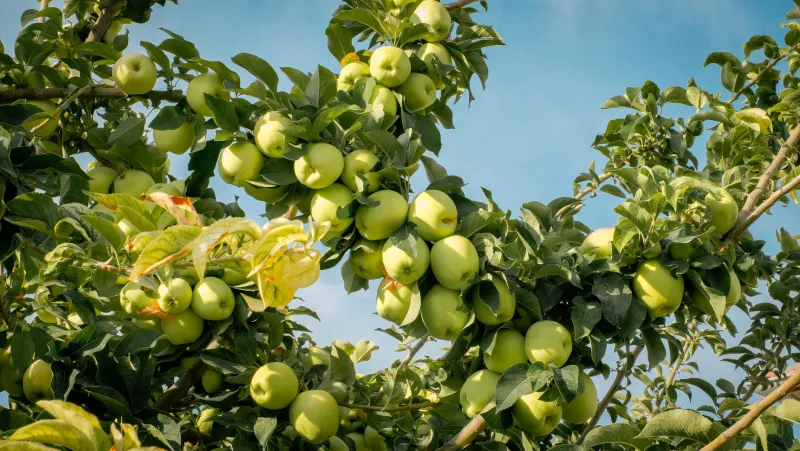
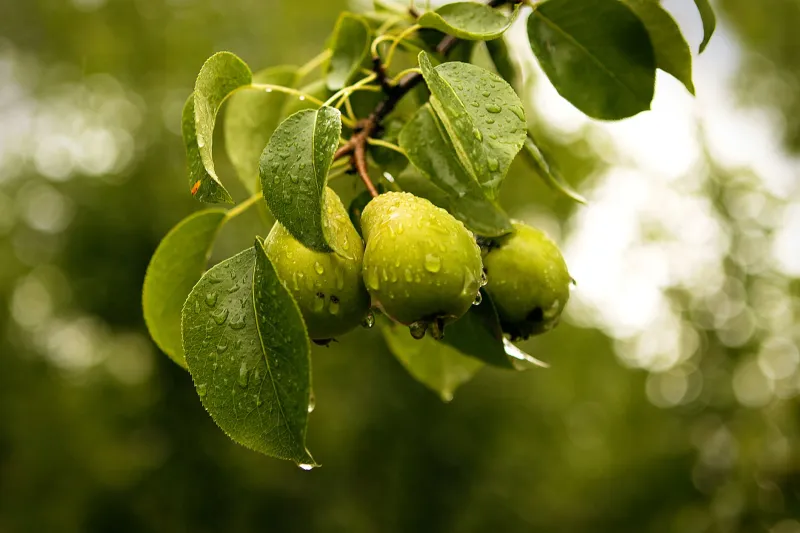
Skin translucency and color depth. In many apple and pear varieties, the skin develops a subtle glow or color shift in the final ripening days that's distinct from simple color change. It's subtle, but once you learn to see it, it's reliable.
The taste test itself. This sounds obvious, but a lot of growers skip it in favor of metrics. Eat the fruit. Pay attention to whether the sweetness has dimension behind it — whether there's a lingering finish, an aromatic quality, a little tartness that makes you want another bite. That experience is the actual goal. Everything else is just a tool to help you get there.
Reframing What "Ripe" Means
The refractometer gave home growers something genuinely useful: an objective, repeatable way to track sugar development across a season. For a lot of growers who were picking way too early, it moved the needle in the right direction.
But it also created a new kind of problem — the idea that ripeness is a number you can hit, rather than a full sensory state that a fruit gradually arrives at through a combination of biochemical processes that no single measurement captures.
The tastiest fruit in your orchard this season probably won't have the highest Brix reading. It'll be the one you let go a little longer than felt comfortable, that smelled right when you picked it, that had just enough give and just enough acid to make the sugar mean something.
That's the kind of ripeness worth growing toward — and no meter can tell you when you've found it. Only your taste buds can do that.