Top Fruit Trees Every American Home Grower Should Know About
Let's be honest — there are a lot of fruit trees out there. Walk into any garden center in spring and you're suddenly staring down a wall of tags with Latin names, chill hour requirements, and cross-pollination charts that make your head spin. So where do you actually start?
We've put together a straightforward rundown of the top fruit trees that American home growers keep coming back to, season after season. These picks are based on flavor payoff, ease of care, adaptability across US growing zones, and how well they reward the effort you put into them.
1. Apple: The Classic That Still Earns Its Spot
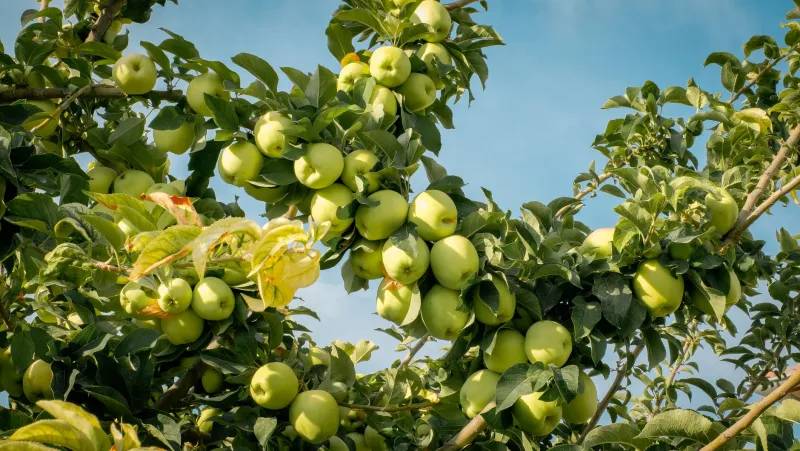
No list of top fruit trees would be complete without the apple. And before you roll your eyes — yes, you can absolutely grow apples that blow anything from the grocery store out of the water. The key is variety selection. Heirloom types like Cox's Orange Pippin, Honeycrisp (yes, you can grow your own), and Arkansas Black offer complexity that mass-market fruit can't touch.
Apples are adaptable across most of the country, though they do need a certain number of cold hours (called chill hours) to produce well. If you're in a warmer zone like the Southeast or Southern California, look for low-chill varieties like Anna or Dorsett Golden.
Best for: Zones 3–9 depending on variety Pollination: Most need a second variety nearby
2. Fig: Low Maintenance, High Reward
Figs have been having a moment, and honestly, it's well deserved. They're one of the most forgiving fruit trees you can grow. No serious pest pressure, drought-tolerant once established, and they don't need a pollinator. Plus the fruit — especially when you pick it dead ripe off the tree — is something you genuinely can't replicate from a store.
Varieties like Brown Turkey and Chicago Hardy are popular across the South and Mid-Atlantic, and Chicago Hardy can even survive winters in Zone 6 with some mulching. If you're in California or the Southwest, you've got even more options.
Best for: Zones 6–10 Pollination: Self-fertile
3. Peach: The Summer Trophy
There's something deeply satisfying about growing your own peaches. They're faster to produce than apples (often fruiting in year two or three), and a sun-warmed peach picked at true ripeness is one of the best things you'll ever eat. Varieties like Reliance, Contender, and Elberta are proven performers across much of the country.
Peaches do need attention — they're susceptible to peach leaf curl and brown rot — but with the right spray timing and good airflow, most home growers manage them just fine.
Best for: Zones 5–9 Pollination: Most are self-fertile
4. Blueberry: The Soil Nerd's Favorite
Blueberries reward growers who pay attention to their soil. They need acidic conditions (pH 4.5–5.5) and really struggle if you don't nail that. But once you do? They're incredibly productive, long-lived shrubs that can fruit for decades with minimal fuss.
Highbush varieties like Bluecrop and Patriot work well in the North, while Rabbiteye types like Tifblue are better suited to the South. Plant at least two varieties for better pollination and heavier yields.
Best for: Zones 3–9 depending on variety Pollination: Cross-pollination recommended
5. Citrus: For the Warmer Zones (and Patient Container Growers Everywhere Else)
If you live in California, Florida, Texas, or the Gulf Coast, citrus is practically a birthright. Meyer lemon, Satsuma mandarin, and Washington Navel orange are all top performers for home growers in warmer climates.
For folks in colder zones, dwarf citrus in containers is a legitimate option — bring them inside over winter, give them a sunny south-facing window, and you can still harvest lemons or limes even in Minnesota.
Best for: Zones 8–11 in-ground; containers everywhere Pollination: Most are self-fertile
6. Pear: The Underrated Gem
Pears don't get nearly enough attention in the home orchard conversation, which is a shame. They're cold-hardy, beautiful trees, and varieties like Bartlett, Bosc, and Seckel produce abundantly once established. Asian pears are also worth exploring — they're crisp and sweet right off the tree and don't need the ripening period that European types do.
One note: pears are susceptible to fire blight, so look for resistant varieties if you're in a humid region.
Best for: Zones 4–9 Pollination: Most need a second variety
How to Choose What's Right for You
Before you buy anything, ask yourself a few questions:
- What's your USDA hardiness zone? This narrows things down fast.
- How much space do you have? Most fruit trees come in dwarf, semi-dwarf, and standard sizes.
- How much time can you commit? Peaches need more attention than figs. Blueberries need more soil prep than apples.
- What do you actually love to eat? Sounds obvious, but grow what you'll use.
The best fruit tree is the one that fits your climate, your space, and your appetite. Start with one or two, learn them well, and expand from there. That's how most great home orchards get built — not all at once, but one good tree at a time.
Final Thought
Growing your own fruit isn't just about the harvest. It's about understanding where food comes from, building something that lasts, and tasting the difference that real care and attention makes. Whatever you plant, you're joining a long tradition of American growers who figured out that the best produce is usually the kind you grew yourself.