Wet Air, Dead Plants: How to Finally Beat Fungal Disease in Your Indoor Fruit Setup
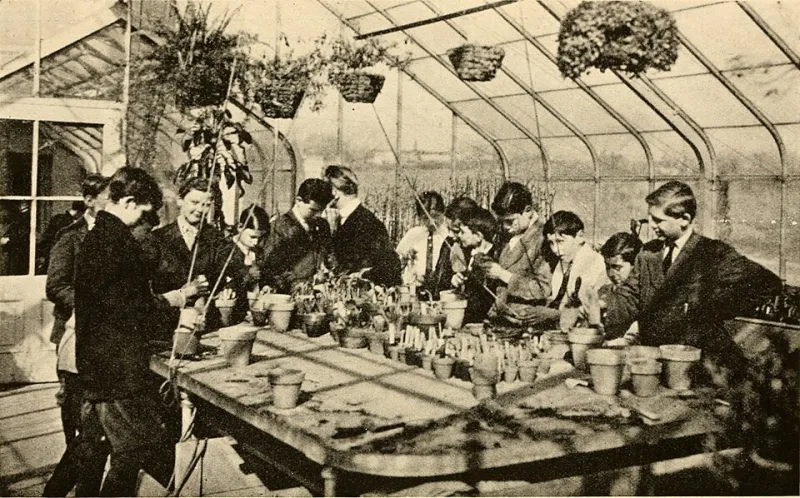
Photo: Internet Archive Book Images, No restrictions, via Wikimedia Commons
Something weird happens when you bring fruit plants inside. You give them the best grow lights money can buy, you nail your watering schedule, you even splurge on premium potting mix — and then, a few weeks in, you notice a faint white fuzz creeping along the soil line. Or the leaves start developing soft brown spots. Or your strawberry blossoms just... rot before they can set fruit.
Welcome to the humidity trap. It's one of the most common and least-talked-about problems in indoor fruit cultivation, and it's quietly wrecking home setups all over the country.
Why Indoor Spaces Are Basically Mold Incubators
Outdoor fruit plants have a built-in advantage most of us never think about: air movement. Even on a calm day, there's enough natural circulation to wick moisture away from leaf surfaces, dry out the top layer of soil, and prevent the kind of stagnant wet conditions that fungal spores absolutely love.
Indoors, that natural circulation disappears. You're working in a sealed or semi-sealed environment where every bit of moisture your plant releases through transpiration just... hangs there. Add in the warmth generated by grow lights, and you've essentially built a terrarium — which is great for tropical plants but a slow disaster for fruit crops trying to produce.
The core problem isn't that your space is humid. It's that humidity plus warmth plus still air creates a microclimate that different fungal pathogens have evolved specifically to exploit.
The Numbers That Actually Matter
Here's where the science gets practical. Different pathogens have different sweet spots, and knowing them helps you target your interventions.
Botrytis cinerea (gray mold) — probably the most destructive fungus for indoor fruit growers — becomes dangerously active at relative humidity above 85%, particularly when temperatures sit between 60°F and 77°F. This is the one responsible for collapsing strawberry flowers and turning blueberry clusters into gray powder.
Powdery mildew, which is actually a different beast than most molds (it doesn't need standing water to germinate), thrives in moderate humidity between 50% and 90%, with a particular preference for conditions around 70°F. Citrus, figs, and grapes grown indoors are especially vulnerable.
Pythium and Phytophthora — the dreaded root rots — operate differently, living in the growing medium itself. They activate when soil stays consistently wet and air circulation at the root zone is poor, regardless of ambient humidity readings.
The takeaway: there's no single humidity number that keeps all pathogens away. But keeping relative humidity in the 45% to 60% range during active growing periods covers most of your bases for common fruit crops.
Reading Your Setup Like a Farmer
Before you start buying equipment, spend a week actually measuring what's happening in your grow space. A basic digital hygrometer (they run $10–$20 on Amazon) placed at canopy level — not on the floor, not near a vent — gives you real data to work with.
Pay attention to patterns. Humidity typically spikes right after watering, during the dark cycle when plants are still transpiring but lights aren't adding warmth, and in the early morning hours if your grow space is in a basement or interior room. Those are your risk windows.
Also look at your plants themselves. White coating on upper leaf surfaces points toward powdery mildew. Soft, water-soaked lesions on fruit or stems suggest Botrytis. Yellowing from the bottom up with roots that smell off? That's likely a root rot situation. Each symptom tells you something specific about where your environmental control is breaking down.
Fixing the Problem Without Reaching for Chemicals
The good news is that most indoor fungal problems are environmental problems first — which means they respond to environmental solutions.
Airflow is your first line of defense. A small oscillating fan running continuously at low speed does more to prevent fungal disease than almost any other single intervention. You're not trying to simulate a windstorm — just enough movement to prevent moisture from settling on leaf and stem surfaces. Position it so air circulates around your plants rather than blasting directly at them.
Restructure your watering habits. Water in the morning (or at the beginning of your light cycle) rather than at night. This gives the growing medium time to partially dry before humidity naturally rises during the dark period. Let the top inch of soil dry out between waterings for most fruit crops — overwatered containers are Pythium's favorite habitat.
Space your plants deliberately. Crowding is one of the most common mistakes indoor growers make. Dense canopies trap moisture, block airflow between plants, and create shaded microclimates where humidity lingers. Give each plant more room than feels necessary, especially once they're in active growth.
Consider a small dehumidifier for enclosed setups. If you're growing in a tent or a dedicated closet, a compact dehumidifier can maintain your target range without constant manual intervention. Set it to cycle on around 60% and you'll eliminate most of the high-risk humidity spikes automatically.
Prune proactively. Remove lower leaves that are close to the soil surface — they're the first to develop fungal issues and they contribute to poor air circulation at the base of the plant. This is especially important for strawberries and dwarf citrus varieties.
A Note on Resistant Varieties
If you're still in the planning stages of your indoor fruit garden, variety selection is worth factoring in. Some cultivars have been bred or selected for better disease resistance in humid conditions. 'Albion' strawberries, for example, show reasonable tolerance to Botrytis compared to some older varieties. Many newer dwarf citrus selections have improved resistance to powdery mildew. It won't eliminate the need for environmental management, but starting with better genetics gives you a meaningful head start.
The Bigger Picture
Indoor fruit cultivation is genuinely exciting — it extends what's possible for urban growers, lets people in cold climates produce food year-round, and opens up crop options that would never survive an outdoor winter in most of the US. But it comes with a learning curve that outdoor growing doesn't, and humidity management is one of the steepest parts of that curve.
The growers who figure this out aren't doing anything magical. They're measuring, observing, and making small adjustments before problems become catastrophic. They treat their grow space less like a garden and more like a living system that needs active management.
Get your airflow right. Watch your humidity numbers. Water smarter, not more. Do those three things consistently, and the mold problem mostly takes care of itself — no fungicides required.