Think Your Zip Code Decides What You Can Grow? Your Backyard Disagrees
Most backyard growers treat their USDA hardiness zone like a firm set of rules handed down from above. Zone 6b? Better not even think about figs. Zone 9a? Forget about cherries. But here's the thing — those zone maps are drawn from regional averages. Your yard isn't average. It's a patchwork of tiny climates layered on top of each other, and once you learn to read them, the whole game changes.
This is microclimate mapping, and it's one of the most underused skills in backyard fruit growing. You don't need fancy equipment or a degree in meteorology. You need patience, a notebook, and the willingness to treat your own land like a research site — because that's exactly what it is.
What a Microclimate Actually Is (And Why Growers Miss Them)
A microclimate is any localized area where temperature, humidity, wind exposure, or light differs meaningfully from the surrounding environment. They exist everywhere — along fence lines, near masonry walls, at the base of slopes, under canopy gaps. The differences can be surprisingly dramatic. A south-facing brick wall in a Chicago backyard can stay 10 to 15 degrees warmer than open ground just twenty feet away. That gap is the difference between a fig tree surviving winter and dying back to the roots every year.
Most growers walk right past these pockets without recognizing them. They plant in rows, follow the tag on the nursery pot, and wonder why one tree thrives while another struggles — both planted the same week, in the same yard.
The fix isn't a better fertilizer. It's better observation.
The Observation Phase: Building Your Baseline
Before you move a single shovel of dirt, spend a full season just watching. Ideally two. Here's what you're tracking:
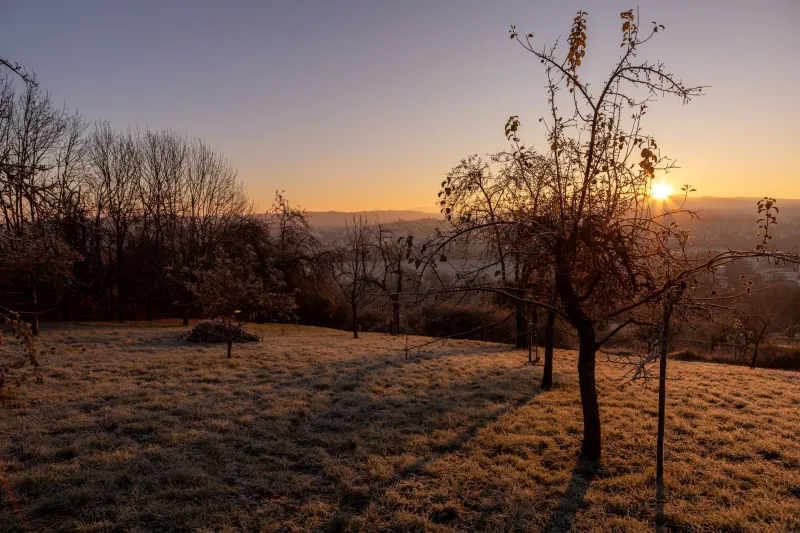
Temperature variation. Pick up a few inexpensive wireless thermometers — the kind with outdoor sensors you can leave in different spots. Place them in your sunniest corner, your shadiest bed, near any masonry or hardscape, and in any low-lying areas where cold air might pool. Cold air is denser than warm air, which means it drains downhill and settles in depressions. That gorgeous low spot in your yard that holds moisture so well? It's probably a frost trap that freezes earlier in fall and later in spring than anywhere else on your property.
Sun tracking. Walk your yard at 9 a.m., noon, and 3 p.m. during different months and note which areas are in full sun versus partial shade. A bed that gets six hours of sun in July might only get three in October once the sun angle drops. Fruit trees have strong opinions about light, and those opinions change with the season.
Wind patterns. Where does the cold northwest wind hit first? Where does it get blocked by a fence, a garage, or a dense hedge? Wind dramatically accelerates heat loss from plants, and a sheltered spot can feel like a whole different zone during a cold snap.
Moisture retention. After a rain, check which spots dry out quickly and which stay damp. Waterlogged soil in winter can kill roots just as effectively as hard freezes. Conversely, spots near downspouts or natural drainage channels may hold more consistent moisture during summer dry spells.
Sketch all of this onto a rough diagram of your property. You don't need it to be pretty. You need it to be honest.
Turning Your Map Into a Planting Strategy
Once you've got a working picture of your yard's climate pockets, you can start matching varieties to locations rather than just planting wherever there's open space.
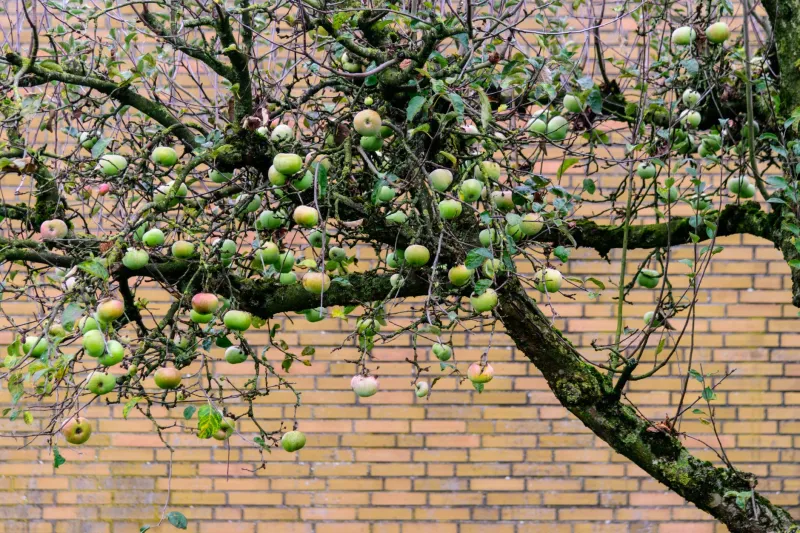
Warm walls and south-facing slopes are your most valuable real estate for pushing zone limits. These are the spots where growers in Zone 7 successfully overwinter cold-sensitive varieties like figs, pomegranates, and even some citrus in containers that get tucked close to the structure in winter. The thermal mass of brick or concrete absorbs heat during the day and releases it slowly at night, buffering against hard freezes. Espalier training — growing trees flat against a wall — is a centuries-old technique that takes full advantage of exactly this effect.
Cold air pockets aren't useless — they just need the right tenants. Some fruit varieties actually benefit from colder temperatures. Many apple and pear cultivars require significant winter chill hours (measured as hours below 45°F) to break dormancy properly and set fruit. If you've got a low-lying frost pocket, that could be your best apple spot. Just make sure it doesn't stay wet, and avoid planting stone fruits there — peaches and cherries that bloom early are devastatingly vulnerable to late spring frosts.
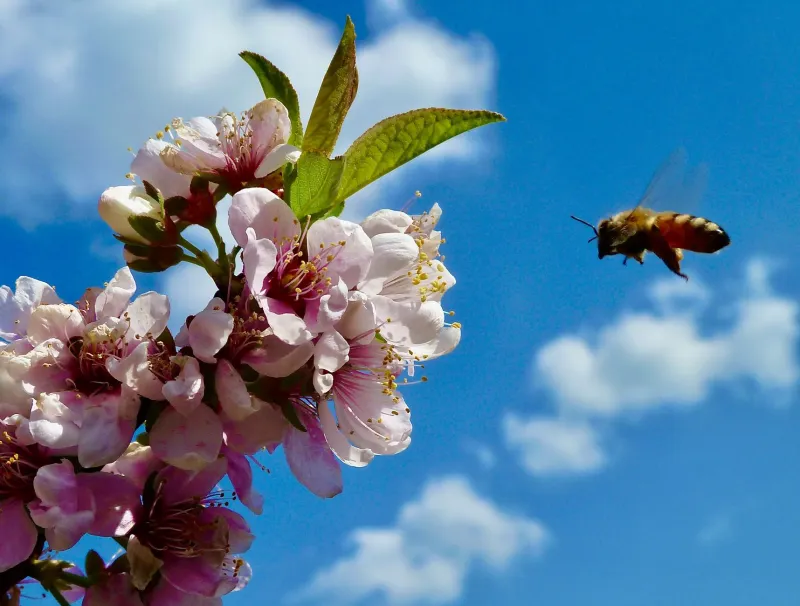
Wind-sheltered zones are ideal for anything that flowers early in the season. A protected corner where cold wind doesn't penetrate can mean your apricot or early peach blossoms survive a late frost that wipes out exposed trees across town. Layering windbreaks — a fence, then a row of dense shrubs, then your fruit trees — can extend your effective season by weeks on either end.
Partial shade microclimates are often overlooked, but they have real uses. Elderberries and certain currant varieties tolerate and even prefer some afternoon shade. In hot southern states, a spot that gets filtered afternoon sun can actually improve fruit quality on varieties that tend to sunburn or soften too quickly in full exposure.
Experimenting Like a Scientist, Not a Follower
Here's where microclimate mapping gets genuinely exciting. Once you understand your yard's climate personality, you can start running low-stakes experiments that a zone map would never encourage.
Try planting the same variety in two different microclimates and track the outcomes side by side. Note bloom dates, frost damage, fruit set, and harvest timing. You'll start accumulating real data about your specific piece of ground — data that no USDA map, no nursery tag, and no gardening forum can give you.
Keep a simple harvest log: date picked, location in yard, rough flavor assessment. Over a few seasons, patterns emerge. You might discover that your north fence line consistently produces later-ripening fruit with higher sugar content, or that the spot near your patio produces earlier but more frost-sensitive harvests. That's your campus. Those are your research findings.
Some growers use this approach to stagger harvests deliberately — planting the same variety in a warm and a cool microclimate so they ripen weeks apart, effectively doubling the fresh-eating window without adding more tree species to manage.
A Few Tools Worth Owning
You don't need to spend a lot. A set of three or four wireless thermometer sensors with a base station display runs under $40 at most hardware stores. A basic soil thermometer helps you track when ground temps are actually warm enough for root activity in spring. A cheap rain gauge placed in different spots can reveal surprising variation in how much water different areas actually receive.
If you want to go deeper, apps like Wunderground pull data from personal weather stations near you, and some growers eventually set up their own station to log conditions over years. But honestly, a notebook and consistent observation will take you further than any gadget.
Your Yard Has More Potential Than Any Map Admits
The most important shift in microclimate mapping isn't technical — it's mental. It means stopping the habit of outsourcing your growing decisions to a zone designation and starting to trust what your own land is telling you.
Every backyard holds surprises. Warm pockets where cold-sensitive varieties quietly survive winters they shouldn't. Sheltered corners where blossoms escape frosts that damage exposed trees. Shaded spots that keep late-season berries from ripening too fast in summer heat.
Those surprises don't show up on any map. They show up when you pay attention.
Grab a notebook, set up a few thermometers, and start reading your land like the research site it actually is. The harvest calendar you've been working with? It's probably a lot more flexible than you think.