Who's Visiting Your Flowers Determines What's In Your Fruit: The Pollinator-Nutrition Connection You Didn't Know Existed
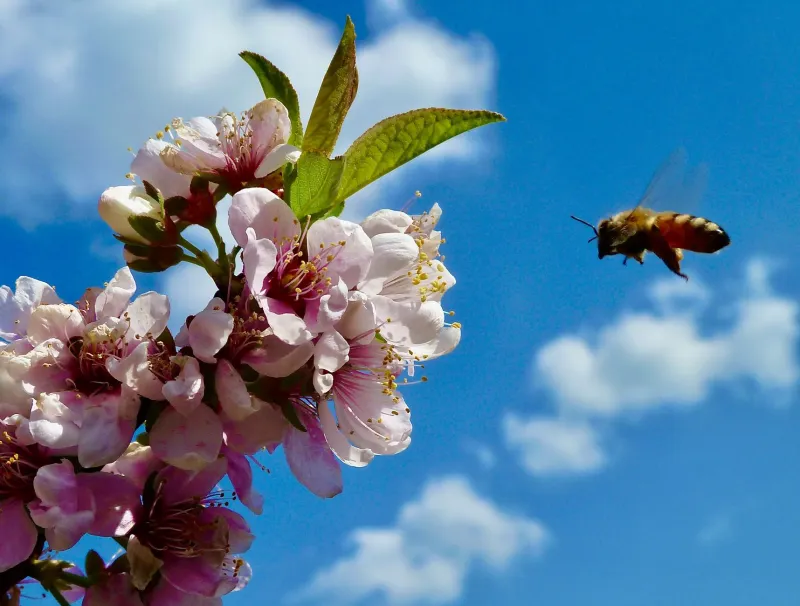
Most growers obsess over soil pH, irrigation schedules, and pruning angles — and those things matter, no question. But there's an upstream variable that quietly shapes the nutritional quality of every piece of fruit you eat, and it happens weeks before you even think about harvest. It happens in the five seconds a bee spends inside a flower.
The species of pollinator visiting your plants, and how many different kinds show up, has a measurable effect on the fruit that develops afterward. We're not just talking about whether fruit sets at all. We're talking about seed count, cell development, sugar-to-acid ratios, and — this is the part that tends to surprise people — the actual micronutrient density in what you end up eating.
Let's walk through how this works, and more importantly, what you can do about it.
Why Seed Count Is a Nutritional Signal, Not Just a Curiosity
When a pollinator moves pollen from anther to stigma, it's triggering a developmental cascade. The more complete that pollination event — meaning more viable pollen grains reaching more ovules — the more seeds develop inside the fruit. And seeds aren't just filler. They're metabolic engines.
Seeds drive the production of plant hormones, particularly auxins, that signal the surrounding fruit tissue to keep developing and accumulating nutrients. A strawberry with 200 well-fertilized achenes (those tiny seed-like structures on the outside) will be measurably richer in vitamin C and antioxidant compounds than a poorly pollinated berry with 80. The same principle plays out in apples, blueberries, tomatoes, and most other fruits you're growing.
This is where pollinator diversity enters the picture in a real way. Different species have different body sizes, foraging behaviors, and flower-handling techniques. A bumblebee's buzz pollination — that rapid vibration that shakes pollen loose — is far more effective at fertilizing blueberry and tomato flowers than anything a honeybee does. Mason bees carry pollen dry on their abdomens, depositing it more efficiently on certain tree fruits. Sweat bees, often dismissed as minor players, can be surprisingly effective on smaller-flowered crops like raspberries.
When only one pollinator type is doing all the work, you're leaving fertilization efficiency on the table — and that inefficiency shows up in your nutrition.
The Micronutrient Angle Most Growers Overlook
Here's where it gets genuinely interesting from a food science perspective. Fruit tissue that develops from well-pollinated ovaries doesn't just grow larger — it develops differently at a cellular level. Better-pollinated fruits tend to have higher concentrations of polyphenols, carotenoids, and certain B vitamins, partly because complete seed development drives more robust metabolic activity throughout the fruit.
Research on strawberries has shown that fruits with higher seed density contain significantly elevated levels of ellagic acid, a polyphenol with notable antioxidant properties. Blueberry studies have found that fruits from plants visited by diverse pollinator communities show greater anthocyanin concentrations — those are the compounds responsible for the deep blue-purple color and much of the fruit's anti-inflammatory reputation.
You can't replicate this with fertilizer. You can have the most minerally-rich soil in your county, and if your flowers are getting sloppy, incomplete pollination from a monoculture of honeybees, you're still leaving nutritional value behind.
Why Honeybees Alone Aren't Enough
Honeybees are incredible, and managed colonies have been essential to American agriculture for generations. But they're generalists with specific limitations. They prefer warmer temperatures and avoid foraging in cool, overcast conditions — which is often exactly when early-spring fruit crops like apples and pears are blooming. They don't buzz-pollinate. And as managed populations, they're typically focused on maximum caloric return, meaning they may skip flowers that require more effort for less reward.
Native bees don't have these constraints in the same way. Mason bees (Osmia species) are active in temperatures as low as 55°F and are documented to be dramatically more efficient at pollinating apple and cherry blossoms than honeybees on a per-visit basis. Bumblebees are essential for any solanaceous crops you might be growing alongside your fruit — peppers, tomatoes, eggplant. Squash bees are specialists that will show up before most other pollinators are even active in the morning.
The more species you attract, the broader your pollination coverage across different flower types, temperatures, and bloom windows.
Building a Pollinator Community That Works for You
Attracting diverse pollinators isn't complicated, but it does require thinking about your growing space as an ecosystem rather than just a production system.
Plant a succession of blooms. Pollinators need food throughout the season, not just during your fruit's bloom window. Early-flowering plants like redbud, willow, and native violets support populations before your orchard even opens. Late-season flowers like goldenrod and aster keep those populations strong after your harvest wraps up. A healthy, year-round food supply means more pollinators present when your fruit trees need them most.
Create nesting habitat. About 70% of native bee species nest in the ground. Bare or lightly mulched patches of well-drained soil — even small ones — give ground-nesting bees a place to establish. Mason bees and leafcutter bees use hollow stems and pre-drilled wood; leaving some dead plant stalks standing through winter and adding a simple bee block near your orchard can meaningfully increase these populations.
Cut the pesticide load during bloom. This one's obvious but worth stating plainly. Even pesticides considered relatively safe for bees can affect their navigation and foraging efficiency when applied during or just before flowering. If you need to spray, do it in the evening when pollinators aren't active, and avoid anything systemic during bloom windows.
Reduce turfgrass around your orchard. Lawn monocultures are ecological deserts for pollinators. Replacing even a portion of the grass around your fruit trees with clover, low-growing native wildflowers, or a mixed groundcover gives foragers something to work with between orchard visits.
Think about water. Pollinators need it, and shallow water sources with landing areas — a dish with pebbles, a muddy patch near a drip line — can make your space more hospitable than a neighbor's yard with nothing to drink.
The Practical Takeaway
You're already doing the work of growing your own fruit. You're investing in soil health, managing water, timing your harvests. The pollinator piece is an extension of that same investment — and it pays dividends in a form you can actually measure in what you eat.
A strawberry patch visited by five different bee species is producing nutritionally richer fruit than the same patch visited by one. An apple tree in a yard humming with mason bees and bumblebees is setting better-developed fruit with higher antioxidant loads than the same tree in a pollinator desert.
You're not just growing food. You're designing the conditions under which your food becomes as nourishing as it possibly can be. And that process starts — genuinely starts — with who shows up to the flowers.