Your Orchard's Secret Workforce: How to Cultivate the Microbial Communities That Keep Fruit Plants Healthy
Photo: Industrees, CC0, via Wikimedia Commons
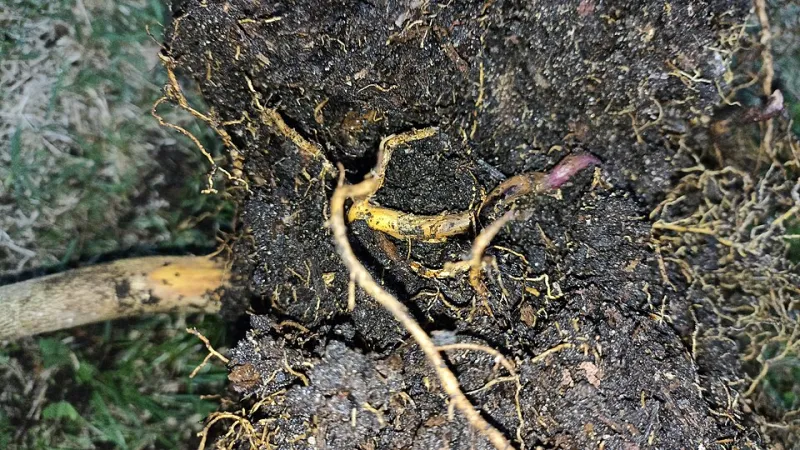
Most growers spend a lot of time thinking about what they can see—leaf color, fruit size, branch structure. But some of the most important decisions happening in your orchard are taking place a few inches underground, in a zone so dense with biological activity that scientists have compared it to a rainforest compressed into a teaspoon of dirt.
That zone is called the rhizosphere, and what lives there can make the difference between a tree that shrugs off fungal disease and one that spends the season fighting for its life.
Here's the thing: you don't have to be a microbiologist to start working with this system. You just have to stop treating your soil like an inert growing medium and start treating it like a community you're responsible for.
What the Rhizosphere Actually Is
The rhizosphere is the narrow band of soil directly surrounding and influenced by plant roots. It's not a fixed location—it moves as roots grow, and its chemistry shifts constantly in response to what the plant needs.
Roots release a steady stream of compounds called exudates: sugars, amino acids, organic acids, and signaling molecules. These exudates aren't waste products. They're deliberate communications. Certain exudates attract specific bacteria. Others suppress particular fungi. The plant is essentially advertising for the microbial partners it needs at any given moment.
Beneficial bacteria like Bacillus subtilis and Pseudomonas fluorescens colonize root surfaces and produce natural antifungal compounds that protect against pathogens like Botrytis (gray mold) and Phytophthora (root rot)—two of the most common fruit-growing headaches in the US. Mycorrhizal fungi, meanwhile, extend a plant's effective root network by orders of magnitude, improving water and nutrient uptake while also producing compounds that suppress soil-borne disease.
When this community is intact and diverse, your fruit plants are essentially surrounded by a living defense system. When it's been disrupted—by synthetic fertilizers, tillage, or fungicide runoff—plants lose that protection and become far more vulnerable.
How Modern Practices Break the System
Conventional orchard management has, often unintentionally, done a number on soil microbial diversity. Broad-spectrum fungicides don't just kill target pathogens—they knock back beneficial fungi too. Synthetic nitrogen fertilizers shift soil pH and chemistry in ways that favor certain fast-reproducing bacteria over the more complex, slower-growing communities that provide disease suppression. Frequent cultivation physically destroys the fungal hyphal networks that take months to establish.
The result is a simplified soil ecosystem—one that's less resilient, less protective, and more dependent on external chemical inputs to keep disease at bay. It's a cycle that's expensive, environmentally taxing, and ultimately unsustainable for the home grower who'd rather spend money on good compost than another bottle of spray.
Breaking that cycle starts with a soil test—but not the kind you're probably thinking of.
Start with a Real Soil Health Assessment
A standard NPK test tells you about nutrient levels. That's useful, but it doesn't tell you anything about biological activity. For that, you need a biological soil test.
Several labs now offer these for home growers at reasonable prices. Companies like Ward Laboratories, Earthfort, and Haney Soil Health labs can give you a breakdown of active bacteria and fungal biomass, the fungal-to-bacterial ratio (a key indicator of ecosystem maturity), and overall microbial respiration rates. The Haney Soil Health Score, in particular, has become a popular benchmark because it integrates biological, chemical, and physical measurements into a single number you can track over time.
A healthy orchard soil typically shows a fungal-to-bacterial ratio greater than 1:1. Most degraded soils skew heavily bacterial, which correlates with reduced disease suppression and lower nutrient cycling efficiency.
Once you know where you're starting, you can build a plan.
Practical Steps to Rebuild Microbial Diversity
Introduce compost strategically. Not all compost is created equal. Hot-composted materials made from diverse organic inputs—wood chips, food scraps, manure, straw—tend to carry a broader microbial community than single-source composts. Apply two to three inches around the drip line of your trees each spring, avoiding direct contact with the trunk. This feeds existing soil life and introduces new populations.
Apply mycorrhizal inoculants at planting. If you're putting in new trees or berry plants this season, mix a mycorrhizal inoculant directly into the planting hole. Products containing Glomus intraradices or blended endo/ecto mycorrhizal species are widely available at garden centers and online. Once established, these fungi can persist for years—but they can't colonize effectively if the soil is repeatedly disturbed or drenched with phosphorus fertilizers, which signal to the plant that it doesn't need fungal help.
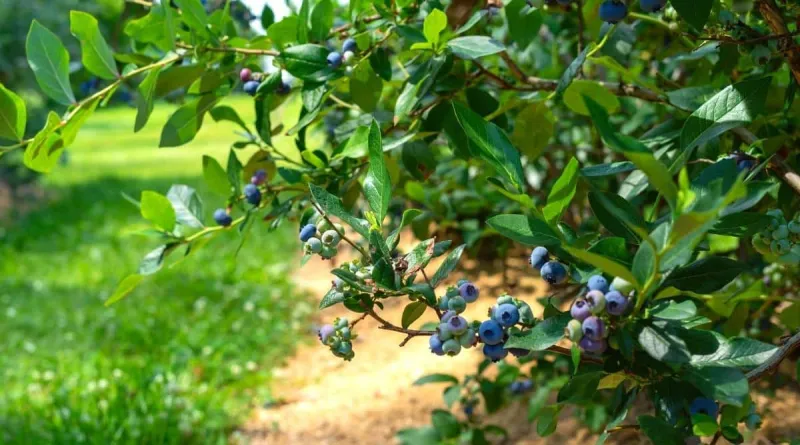
Use compost teas and biological drenches. Actively aerated compost tea (AACT) brewed for 24 to 36 hours can deliver a concentrated dose of beneficial microbes directly to the root zone. Drench applications of Bacillus subtilis products (sold under brand names like Serenade and RootShield) have solid research support for suppressing Botrytis and Fusarium in berry crops and tree fruit.
Reduce tillage. Every time you till, you're shredding fungal networks and exposing soil to UV light and temperature extremes that kill sensitive microbes. Switch to a no-till or minimal-till approach under your trees and use mulch to maintain moisture and temperature stability.
Diversify your ground cover. Bare soil is biologically impoverished soil. Planting a diverse cover crop mix—clovers, buckwheat, annual ryegrass, phacelia—between orchard rows feeds a much wider range of microbial species than bare ground or a monoculture grass sod. Different plant species release different exudates, which support different microbial communities.
Measuring Your Progress
You don't have to wait for a lab to tell you things are improving. Some of the most reliable indicators are observable:
- Earthworm density is a rough proxy for soil biological health. More worms mean more microbial activity and better soil structure.
- Water infiltration rate improves as fungal networks stabilize soil aggregates. If water no longer pools on the surface after rain, that's a good sign.
- Disease incidence should decline over two to three seasons as suppressive communities establish themselves. Track your spray log and compare year to year.
- Repeat biological testing every two years gives you hard data to confirm that your fungal-to-bacterial ratios are trending in the right direction.
This isn't an overnight fix. Rebuilding a complex soil ecosystem takes time, especially in soils that have been conventionally managed for years. But growers who commit to the process consistently report not just reduced disease pressure, but better fruit flavor, improved drought resilience, and lower overall input costs.
The microbiome revolution isn't happening in a lab somewhere—it's happening in backyards and small orchards across the country, one shovelful of good compost at a time. The science is solid. The tools are accessible. And the workforce, it turns out, has been waiting underground all along.