What Your Citrus Tree Is Trying to Tell You Through Its Flavor
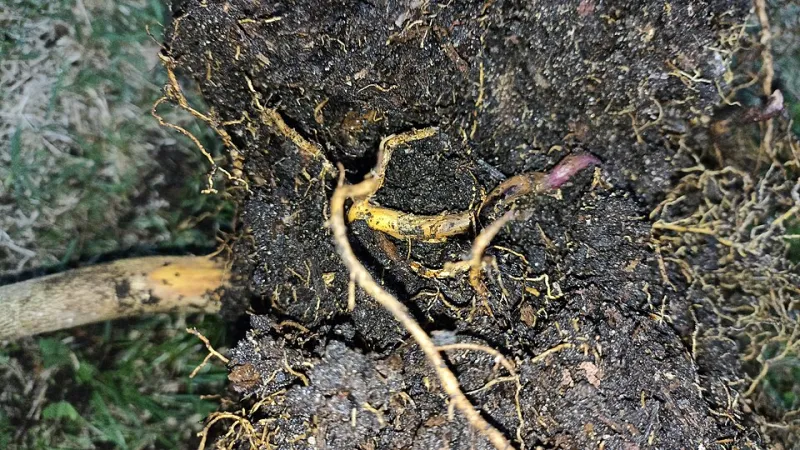
Photo: Eiku, CC BY-SA 4.0, via Wikimedia Commons
You bite into a homegrown navel orange expecting that deep, honeyed sweetness, and instead you get something flat, weirdly bitter, or just... wrong. The tree looks fine. The leaves are green. You watered it. You fertilized it. So what gives?
More often than not, the answer is living — or more precisely, dying — in the soil beneath your feet.
Citrus trees are surprisingly sensitive communicators, and flavor is one of their loudest signals. When the microbial community in the root zone falls out of balance, the tree can't access the nutrients it needs, stress hormones accumulate, and the fruit reflects all of that dysfunction in the form of bitterness, thin rinds, or reduced sugar content. Understanding what's happening underground is one of the most underrated skills a citrus grower can develop.
The Root Zone Is a Living System
Most growers think about soil in terms of what it contains — nitrogen, phosphorus, potassium, pH. But soil isn't just a chemical medium. It's a living ecosystem, and in healthy citrus groves, it's an extraordinarily busy one.
Beneficial mycorrhizal fungi form symbiotic relationships with citrus roots, extending the root system's reach by hundreds of times. These fungal networks help the tree pull in phosphorus, zinc, and water from parts of the soil a root tip could never reach on its own. Meanwhile, nitrogen-fixing bacteria convert atmospheric nitrogen into plant-available forms, and a broad community of microbes breaks down organic matter, cycling nutrients continuously through the system.
When that community is thriving, your citrus tree is essentially plugged into a nutrient delivery network that no bottle of fertilizer can fully replicate. When it collapses — through overuse of synthetic inputs, soil compaction, drought stress, or disease pressure — the tree is left trying to feed itself with one hand tied behind its back.
And that struggle shows up in your fruit.
Signs Your Citrus Soil Microbiome Is Out of Balance
Bitter or off-flavored fruit is one clue, but there are others worth watching for:
- Persistent yellowing between leaf veins (interveinal chlorosis), even after fertilizing, often signals that the tree can't actually absorb what you're putting down
- Slow growth or stunted new flushes despite adequate water and nutrients
- Fruit that drops early or fails to size up properly
- Recurring fungal disease at the soil line, particularly Phytophthora root rot, which thrives when beneficial microbial competition is absent
- Soil that crusts over quickly after watering, indicating poor structure and low microbial activity
If you're seeing two or more of these together, it's worth digging a little deeper — literally. Healthy citrus soil should smell earthy and slightly sweet, almost like a forest floor. Soil that smells sour, sulfurous, or just like plain dirt is telling you something important.
Common Culprits That Wreck the Microbial Community
Before you can fix the problem, it helps to know what caused it. A few common disruptors:
Heavy synthetic fertilizer use. High-nitrogen synthetic fertilizers can suppress mycorrhizal fungi and shift the bacterial community toward fast-cycling, less stable species. The tree gets a short-term boost but loses its long-term support network.
Fungicide and herbicide applications near the root zone. Broad-spectrum products don't discriminate. They hit beneficial organisms just as hard as pathogens.
Soil compaction. Whether from foot traffic, heavy machinery, or simply clay-heavy soil, compaction drives out the oxygen that aerobic microbes need to survive.
Overwatering or poor drainage. Waterlogged soil becomes anaerobic fast, creating conditions where harmful pathogens outcompete beneficial organisms.
Bare soil management. Keeping the ground around your citrus trees perfectly clean and mulch-free eliminates the organic matter that microbial communities depend on for food and shelter.
Practical Ways to Rebuild Without Chemicals
The good news is that soil biology is remarkably resilient. With consistent attention, most citrus growers can see measurable improvement within a single growing season.
Start with compost — the real stuff. Finished, biologically active compost is the single most effective tool for reintroducing microbial diversity. Apply a two- to four-inch layer from the drip line inward (keeping it away from the trunk itself) and let it work. Worm castings mixed in are a bonus.
Inoculate with mycorrhizal fungi. Quality mycorrhizal inoculants are widely available from garden suppliers and online retailers. Apply them directly to the root zone during transplanting or as a soil drench for established trees. Look for products containing Glomus intraradices or Rhizophagus irregularis, both of which are well-documented partners for citrus.
Brew or apply compost tea. Actively aerated compost tea (AACT) delivers a concentrated dose of beneficial bacteria and fungi directly to the root zone. It's a low-cost option for growers who already have compost on hand.
Mulch generously. Wood chip mulch, straw, or shredded leaves mimic the natural leaf litter that forest soils depend on. This feeds the fungal networks, moderates soil temperature, and retains moisture — all of which support microbial stability.
Reduce or eliminate synthetic inputs. Transitioning to organic or slow-release fertilizers gives the microbial community space to recover. Fish emulsion, kelp meal, and feather meal are solid alternatives that feed both the tree and the soil life.
Let cover crops do some work. If you have space between trees, planting nitrogen-fixing cover crops like clover or hairy vetch adds organic matter, attracts beneficial insects, and supports the broader soil food web.
The Patience Part
Rebuilding a depleted citrus microbiome isn't an overnight fix. You're not just adding a nutrient — you're restoring an ecosystem. Expect to give it a full season or two before you see the full payoff in your fruit flavor.
But here's what makes the effort worthwhile: once that underground network is healthy and stable, it largely manages itself. The trees become more drought-tolerant, more disease-resistant, and more consistently productive. And your fruit? It starts tasting the way citrus is actually supposed to taste — complex, bright, and worth every bit of the wait.
The soil isn't just where your tree lives. It's where your fruit is made. Treat it accordingly.