What's Actually Living in Your Blueberry Soil — And Why It Matters More Than Any Fertilizer
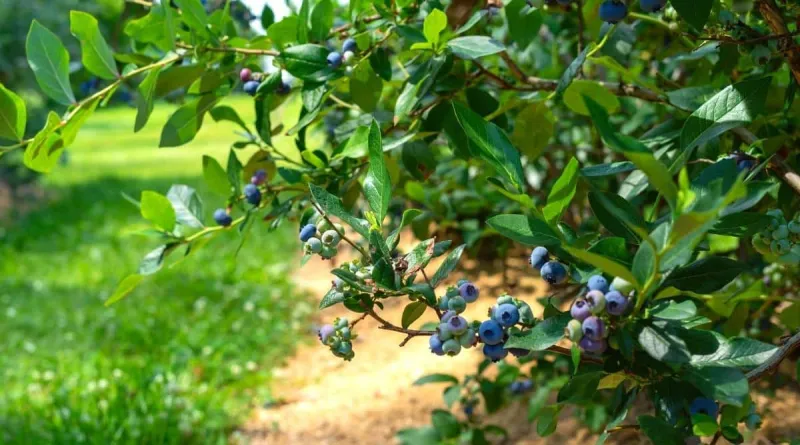
Photo: backyard blueberry bush healthy soil close up gardening, via www.epicgardening.com
Walk down the produce aisle and those blueberries look pretty convincing — plump, uniform, and dusted with that classic silvery bloom. But here's a question worth sitting with: are they actually good for you in the way a blueberry is supposed to be?
If you've got even a small patch of blueberry bushes growing in your backyard, the answer might genuinely surprise you. Home-grown blueberries, when cultivated with attention to soil health, can contain measurably higher levels of anthocyanins, polyphenols, and flavor-driving aromatic compounds than their commercially farmed counterparts. And the reason comes down to something most gardeners overlook entirely — what's happening beneath the surface.
Let's dig in.
The pH Sweet Spot: Why Blueberries Are Picky for Good Reason
Blueberries aren't just being fussy when they demand acidic soil. The ideal pH range for highbush varieties — the most common type grown in American home gardens — sits between 4.5 and 5.5. That's significantly more acidic than most garden beds, and it's not arbitrary.
At that pH range, specific nutrients like iron, manganese, and zinc become far more bioavailable to the plant. When a blueberry bush can readily absorb these micronutrients, it produces more of the secondary metabolites — including those anthocyanins that give berries their deep blue-purple pigment and their antioxidant punch — as a natural byproduct of a healthy, well-fed plant.
Commercial operations manage soil pH at scale, but large-acreage farming introduces inconsistency. Rows at the edges of a field, areas near irrigation lines, and patches with variable organic matter all create pH drift. Home growers, working with a few raised beds or a small dedicated plot, can monitor and adjust pH with a precision that large farms simply can't replicate economically.
Practical tip: Test your soil every spring using an inexpensive home kit or by sending a sample to your local cooperative extension office. If you need to lower pH, elemental sulfur worked into the soil several months before planting is your most reliable tool. For a quick seasonal adjustment, a diluted solution of organic apple cider vinegar can help between major amendments.
Mycorrhizal Fungi: The Underground Network Your Berries Depend On
Here's where things get genuinely fascinating — and where backyard growers hold a real structural advantage over industrial agriculture.
Blueberry plants form symbiotic relationships with a specific group of fungi called ericoid mycorrhizae. Unlike the arbuscular mycorrhizal fungi that help most vegetable crops, these specialized organisms colonize the fine root hairs of blueberry plants and dramatically extend the plant's ability to absorb water and nutrients, particularly nitrogen and phosphorus in acidic conditions where those elements are otherwise hard to access.
The problem? Commercial blueberry production often involves synthetic fertilizer regimens, heavy tillage, and fumigation practices that disrupt or outright destroy these fungal communities. Once that underground network is broken, plants become dependent on external inputs just to maintain baseline productivity.
In a home garden managed with organic practices — minimal tilling, mulching with acidic materials like pine bark or wood chips, avoiding synthetic fungicides near root zones — mycorrhizal populations can flourish across seasons. Over time, an established blueberry patch with a healthy fungal network actually becomes more self-sufficient, not less. The berries it produces reflect that biological richness.
You can also inoculate new plantings with purchased ericoid mycorrhizal inoculant. It's inexpensive, widely available online, and applied directly to roots at planting time. Think of it as giving your bushes a head start on building the network they need.
Organic Matter and the Microbial Ecosystem Driving Flavor
Anthocyanin content is one measurable marker of blueberry quality, but flavor is where home-grown berries really pull ahead — and the explanation lives in the soil's microbial community.
Research published in agricultural journals has consistently shown that soils with higher organic matter content support more diverse bacterial and fungal communities. Those communities break down organic material into humic acids and bioavailable mineral complexes that influence how a plant synthesizes aromatic compounds. In blueberries, this translates to higher concentrations of terpenes and esters — the molecules responsible for that complex, almost floral sweetness that a truly ripe home-grown berry delivers.
Building organic matter in blueberry beds takes patience but pays off compoundingly. Layer composted pine needles, aged wood chips, or shredded oak leaves around your plants each fall. Avoid fresh grass clippings or high-nitrogen compost materials that can throw off pH balance. Over three to five seasons, you'll develop a spongy, dark, fragrant mulch layer that functions as both insulation and a slow-release nutrient source — and the microbial life within it will become one of your most valuable growing assets.
What Commercial Harvesting Costs You Nutritionally
Timing matters enormously. Blueberries continue developing anthocyanins and other phenolic compounds right up until full ripeness — and then past it, actually, with some research suggesting that slightly over-ripe berries have peak antioxidant levels before they begin to degrade.
Commercial operations harvest mechanically, often before peak ripeness, because berries need to survive transport, cold storage, and extended shelf time. A berry picked slightly underripe and shipped from a farm in Georgia or Michigan to a distribution center and then to a store in Colorado may be two weeks old before it reaches your bowl. During that time, volatile aromatic compounds evaporate, and some antioxidant activity diminishes.
Your backyard berries get picked when you decide they're ready — and they go from bush to bowl in minutes. That timing alone accounts for a significant portion of the quality gap between home-grown and store-bought.
Actionable Steps to Maximize Your Patch's Potential
You don't need a science lab or an agricultural degree to put these principles to work. Here's a practical checklist for home growers at any experience level:
- Test soil pH every spring and amend with elemental sulfur as needed to stay in the 4.5–5.5 range
- Inoculate new plantings with ericoid mycorrhizal fungi at planting time
- Mulch deeply (3–4 inches) with acidic organic materials — pine bark and shredded oak leaves are both excellent choices
- Avoid synthetic fertilizers when possible; opt for acidic organic fertilizers formulated specifically for blueberries
- Skip the tilling — let your soil structure build undisturbed season over season
- Harvest at true ripeness — wait until berries detach from the cluster with almost no resistance, and the color is uniformly deep blue with no red shoulders
- Plant multiple varieties to extend your season and encourage cross-pollination, which improves berry size and nutrient density
The grocery store version of a blueberry is a logistical achievement. Your backyard version is a biological one. And biology, as it turns out, wins on flavor, nutrition, and satisfaction every single time.