Meet the Grape That's Been Growing Wild in Your Backyard for Centuries
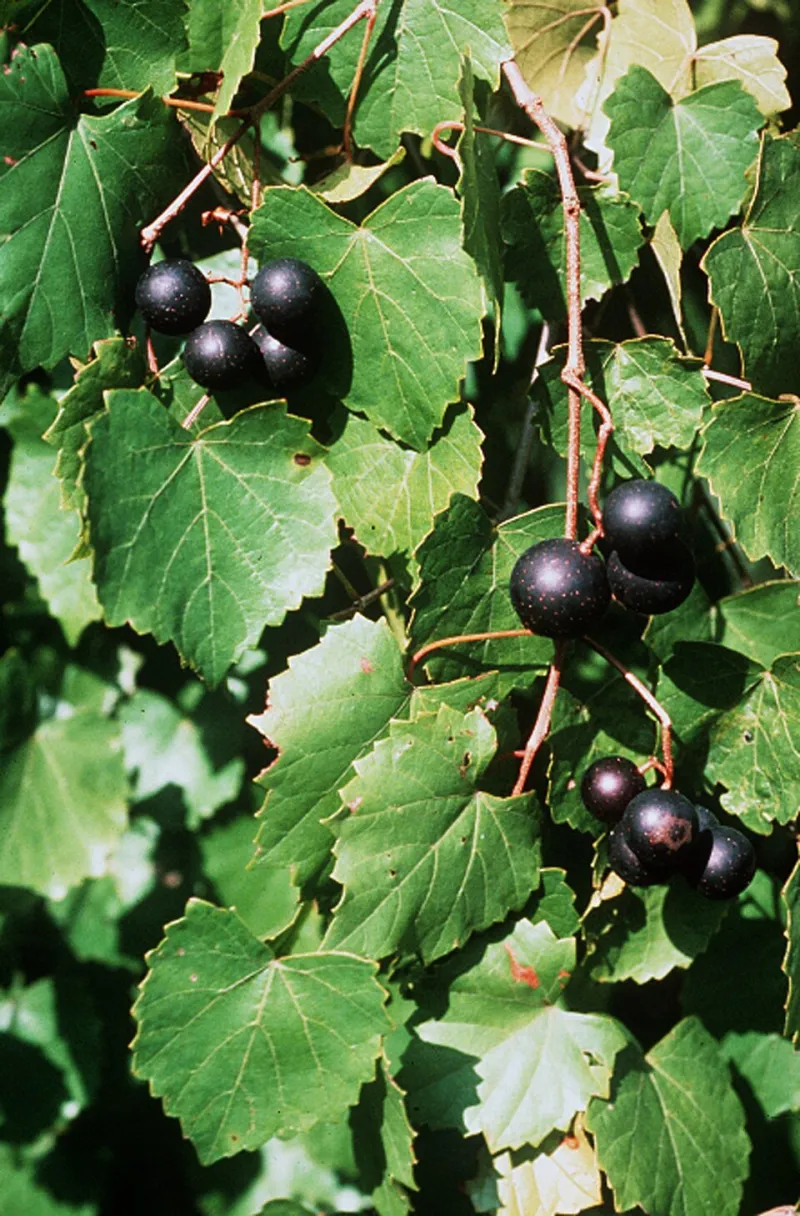
Photo: Unknown, Public domain, via Wikimedia Commons
Somewhere in the American South right now, a muscadine vine is doing exactly what it's been doing for thousands of years — thriving without irrigation, without fungicide, without a single human intervention, producing thick-skinned, musky-sweet clusters of grapes that wildlife has been fighting over since long before there were vineyards.
And somehow, most American growers have never even considered planting one.
That's a missed opportunity worth correcting.
A Fruit That Belongs Here
Unlike nearly every other grape variety you'll find at a nursery, muscadines (Vitis rotundifolia) are genuinely, originally American. They're native to the southeastern United States, and they've been part of the landscape from Florida to Virginia to Texas for longer than European settlers have been on the continent. Indigenous communities ate them fresh and dried. Early colonists made wine from them. And for a long stretch of American agricultural history, they were a staple fruit crop across the rural South.
Then European wine grapes arrived, and muscadines got quietly sidelined — too regional, too unfamiliar, too different from what the broader market expected from a grape.
But regional is exactly the point. In a food system that increasingly rewards locality, seasonality, and climate resilience, muscadines have a serious argument to make.
Built for the American South (and Increasingly, Beyond It)
If you've ever tried to grow European wine grapes — Vitis vinifera varieties like Cabernet or Chardonnay — in Georgia, Alabama, or Mississippi, you already know the frustration. Pierce's disease, downy mildew, black rot, and the relentless humidity of a Southern summer will decimate them. You end up spraying constantly and harvesting inconsistently.
Muscadines are immune to Pierce's disease. They have natural resistance to most of the fungal diseases that plague other grapes. They handle heat, humidity, and clay-heavy Southern soils the way a native plant does — because that's what they are.
In USDA hardiness zones 6 through 10, muscadines are genuinely low-maintenance once established. They need a sturdy trellis, a reliable pollinator variety nearby, and a yearly pruning. That's largely it. Compared to peaches, blueberries, or conventional grapes, the input-to-yield ratio is remarkably favorable.
And growers in the Carolinas, Tennessee, and even parts of the mid-Atlantic are increasingly finding that newer cold-hardy selections are pushing the viable range further north than anyone expected a decade ago.
The Varieties Worth Knowing
One of the most compelling things about muscadines is the sheer variety of flavor profiles available. This isn't a one-note fruit.
Carlos — A bronze-skinned variety and one of the most widely planted in the Southeast. Self-fertile, reliable producer, mild and sweet with low acidity. Great for fresh eating and wine.
Ison — A large, deep purple-black grape with rich, complex flavor. Excellent fresh and for juice. One of the most popular among small-scale commercial growers.
Supreme — One of the largest muscadine varieties, with impressive berry size and a sweet, balanced flavor. A showstopper at farmers markets.
Fry — Another bronze variety prized for sweetness and size. Widely recommended for home growers who want a reliable, crowd-pleasing fresh-eating grape.
Nesbitt — A self-fertile black variety with excellent flavor and good disease resistance, increasingly popular in states pushing the northern edge of muscadine territory.
Flavor in muscadines is noticeably different from the table grapes most Americans grew up with. The skin is thick and slightly chewy, the flesh is soft and intensely sweet, and there's a distinctive musky note — some people love it immediately, others need a couple of tries to appreciate it. Think of it the way you'd think about a really ripe, aromatic melon: unfamiliar at first, then hard to stop eating.
The Nutrition Angle Is Genuinely Impressive
Muscadines don't just grow well — they're nutritionally remarkable. They're among the richest food sources of resveratrol, the polyphenol compound extensively studied for its cardiovascular and anti-inflammatory properties. Interestingly, muscadines contain resveratrol in both the skin and the seeds, giving them a higher concentration than most red wine grapes.
They're also high in ellagic acid, a naturally occurring compound with antioxidant properties, and they deliver solid amounts of fiber, vitamin C, and manganese. Some nutritional researchers have specifically called out muscadines as one of the most antioxidant-dense fruits available in the American diet — a claim that gets more interesting when you consider how easy they are to grow at home.
Growing Them: The Practical Basics
Getting started with muscadines isn't complicated, but a few fundamentals make a real difference.
Site selection. Full sun is non-negotiable — aim for at least eight hours daily. Muscadines tolerate a wide range of soils but need good drainage. They'll struggle in standing water.
Trellis setup. A single high-wire trellis system (one wire at about five to six feet) works well for most home growers. Give each vine eight to ten feet of horizontal space.
Pollination. Most muscadine varieties are either self-fertile or require a cross-pollinator nearby. Check the variety description carefully. If you're planting a non-self-fertile variety like Fry, you'll need a self-fertile variety like Carlos within about 50 feet.
Pruning. Annual dormant-season pruning is essential for managing vigor and maximizing fruit production. Cut back lateral shoots to two or three buds each winter.
Pest and disease pressure. Honestly, it's minimal compared to most fruit crops. Occasional grape berry moth pressure and Japanese beetle feeding are the most common issues. No routine spraying required in most situations.
The Economic Case for Small Farms
For small and mid-size farms looking to diversify, muscadines deserve serious consideration. Fresh muscadines command premium prices at Southern farmers markets, often selling for $4 to $6 per pound. Value-added products — muscadine wine, jam, juice, and dried fruit — extend the season and the margin significantly.
Agritourism operations in states like North Carolina and Georgia have built pick-your-own muscadine experiences that draw steady late-summer crowds. The harvest window (typically August through October, depending on variety) fills a gap in the farm calendar when other crops have wound down.
The startup costs are low. The ongoing inputs are minimal. And the demand, particularly in regional and direct-to-consumer markets, is quietly growing as more people discover what they've been missing.
A Native Fruit for a Changing Climate
There's something fitting about the moment muscadines are having. As growers across the South deal with increasingly unpredictable weather, extended heat seasons, and the rising cost of inputs, a fruit that evolved specifically to handle those conditions without complaint starts looking less like a regional curiosity and more like a genuinely smart agricultural choice.
Muscadines don't need to be coddled. They don't need to be convinced to grow in American soil. They were already here, doing just fine, long before anyone thought to ask.
Maybe it's time we caught up with them.