Harvest Timing and Better Sleep: What Your Fruit Knows About Your Body Clock
Most of us think about sleep hygiene in terms of screen time, room temperature, or that second cup of coffee we probably shouldn't have had at 3 p.m. But there's a growing body of research pointing toward something less obvious: the nutritional composition of what you eat — and specifically when that food was harvested — may have a measurable impact on how well you sleep.
For home growers, this opens up a genuinely interesting question. If you're already putting in the work to grow your own fruit, are you harvesting it at the moment when it does the most good?
Plants Have Clocks Too
Circadian rhythms aren't exclusive to humans. Plants operate on their own internal 24-hour cycles, regulating everything from photosynthesis and stomatal opening to the production of secondary metabolites — the chemical compounds that include antioxidants, phytonutrients, and flavor precursors.
Research published in plant biology journals over the past decade has shown that the concentration of specific compounds in fruit tissue fluctuates across the day and across the ripening timeline. Melatonin, for instance, is not just a mammalian sleep hormone — it's synthesized in plants too, where it functions as an antioxidant and stress-response molecule. Tart cherries have become the poster child for this conversation, with studies showing measurable melatonin content that varies based on both ripeness stage and time of harvest.
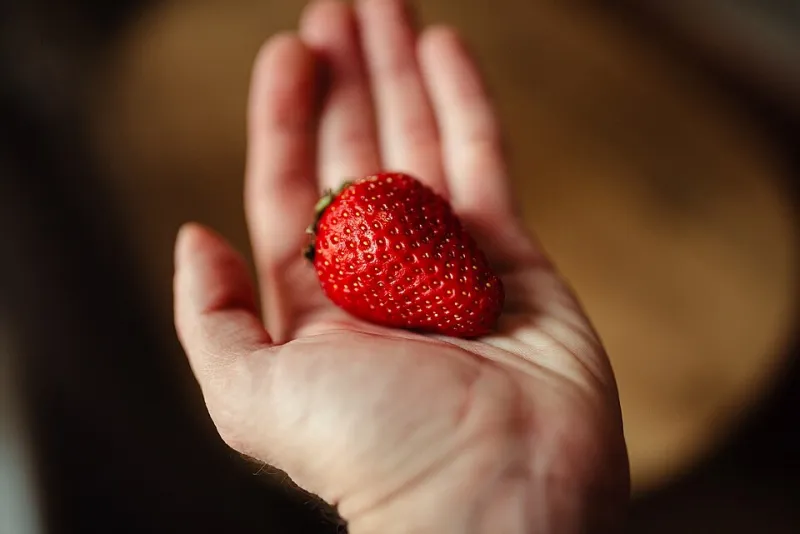
But cherries are just the most-studied example. Grapes, tomatoes, strawberries, and several other fruits also contain phytomelatonin, and the concentrations aren't static. They shift based on how ripe the fruit is, what environmental stressors the plant has experienced, and — intriguingly — what time of day the fruit is harvested.
The Ripeness Window and What It Means for Nutrition
Ripeness isn't a single moment. It's a continuum, and different compounds peak at different points along that arc. This is where it gets practical for anyone growing fruit at home.
Tart cherries, for example, tend to show higher melatonin concentrations when harvested at full ripeness compared to slightly underripe fruit. The same pattern holds for many polyphenols — the broader class of plant compounds associated with anti-inflammatory effects and, increasingly, with sleep quality and circadian regulation in human subjects.
Anthocyanins, the pigments responsible for the deep red and blue colors in cherries, blueberries, and certain plum varieties, have been studied for their role in reducing oxidative stress — a condition linked to disrupted sleep architecture. These compounds also tend to peak at or near full ripeness, which means harvesting early (as commercial operations routinely do) leaves a significant portion of that potential on the table.
For the home grower, the message is straightforward: letting your fruit fully ripen before harvest isn't just about flavor. It's about capturing the full chemical complexity your plants have been working to build.
Timing the Harvest for Maximum Phytonutrient Capture
So when, exactly, should you be out there with your basket?
The research on diurnal variation in fruit chemistry — meaning the changes that happen across a single day — is still emerging, but some patterns are becoming clearer. Several studies have noted that secondary metabolite concentrations, including certain antioxidants and aromatic compounds, tend to be higher in the morning hours, before the heat of the day accelerates metabolic breakdown. This aligns with traditional harvesting practices in many agricultural cultures, which favored early morning collection not just for temperature management but, it seems, for quality reasons that weren't fully understood at the time.
For stone fruits like peaches and nectarines, early morning harvest also reduces the window during which the fruit is exposed to peak-temperature stress before being consumed or stored, which helps preserve volatile compounds and water-soluble nutrients. For berries, which are metabolically active even after picking, cooler morning harvests slow the enzymatic processes that degrade antioxidants post-harvest.
This doesn't mean you need to be in the garden at 5 a.m. with a headlamp. But if you have flexibility in your harvest schedule, earlier in the day is generally going to net you fruit with a more intact nutritional profile — including whatever sleep-relevant compounds your specific varieties are producing.
What the Science Actually Says About Fruit and Sleep
Let's be clear: this isn't a field with decades of double-blind clinical trials behind it. The research connecting specific fruit phytonutrients to measurable sleep outcomes in humans is promising but still developing. What we do have is a reasonable mechanistic picture.
Melatonin from dietary sources like tart cherries has shown statistically significant effects on sleep duration and quality in several small human trials. Tryptophan, a precursor to both serotonin and melatonin, is present in meaningful amounts in bananas and certain other fruits. Magnesium, which plays a role in sleep regulation, is found in figs and avocados. And the broader anti-inflammatory and antioxidant activity associated with polyphenol-rich diets has been linked in epidemiological research to lower rates of sleep disorders.
None of this is magic. But it is a coherent story: the same ripeness-dependent chemical complexity that makes homegrown fruit taste better than its commercial counterpart may also make it a more functionally useful food — including for something as fundamental as how well you sleep.
Growing With Circadian Awareness
For growers who want to take this seriously, a few practical habits are worth building into your routine.
Keep a simple harvest log. Note what you picked, when you picked it, and how ripe it was. Over a season or two, you'll start to develop an intuitive sense of the ripeness window for each variety in your specific microclimate — which is more valuable than any general guideline.
Pay attention to variety selection. If sleep-supportive nutrition is a genuine priority, tart cherry varieties like Montmorency (widely grown across the Midwest and Northeast) are the most evidence-backed option available to home growers. Among grape varieties, darker-skinned cultivars tend to show higher anthocyanin and resveratrol content. Among stone fruits, varieties with deeper flesh color often correlate with higher carotenoid and polyphenol loads.
Consider how you're consuming what you grow. Eating fruit in the evening hours, particularly melatonin-containing varieties, is more likely to support sleep than the same fruit consumed first thing in the morning — not because morning fruit is bad, but because the compounds are more relevant to your body's evening wind-down chemistry.
Your Garden Is a Pharmacy You're Already Building
The idea that your harvest schedule could influence your sleep quality might sound like a stretch. But the underlying science is grounded: plants produce compounds on biological schedules, those compounds are sensitive to ripeness and harvest timing, and some of them interact meaningfully with human physiology in ways that are just beginning to be mapped.
As a home grower, you already have something commercial agriculture can't easily replicate — the ability to harvest at the exact moment that serves you best, not the supply chain. That's a real advantage. Learning to use it well is what growing smarter is all about.