How Your Tree's Skeleton Decides Next Year's Fruit: A Branch Architecture Primer for Smarter Pruning
Most of us pick up the pruning shears when a branch looks crowded, dead, or just plain in the way. That reactive approach isn't wrong exactly — but it's leaving a lot of yield and quality on the table. The decisions you make about your tree's structure today are essentially writing the story of next year's harvest before the season even begins.
Here's what changes when you start thinking about pruning as architecture rather than maintenance.
The Branch Isn't Just a Branch — It's a Fruiting System
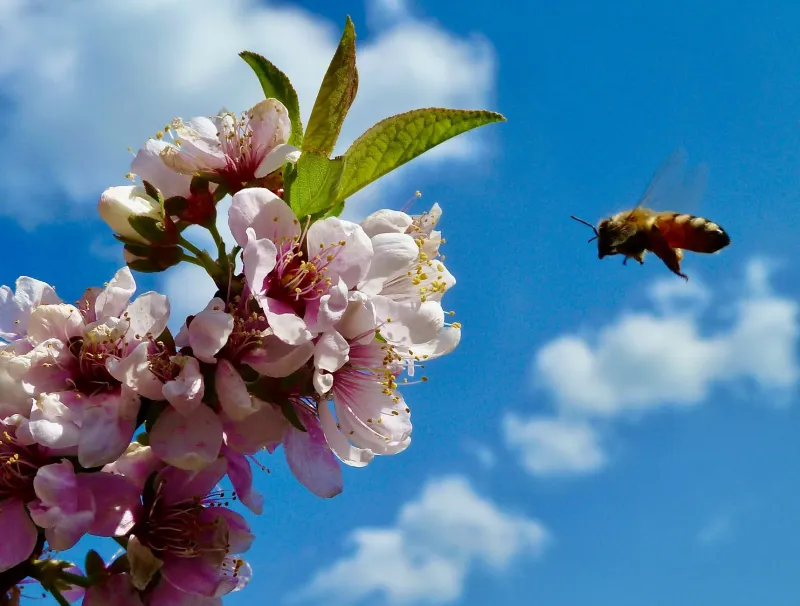
Fruit trees don't produce randomly. Every variety has a specific pattern for where and how it sets flowers, and those patterns are tied directly to branch age, angle, and light exposure. On apple and pear trees, for example, most fruit develops on short, stubby lateral growths called spurs — and those spurs need to be at least two to three years old before they're productive. On peaches and nectarines, it's almost the opposite: fruit forms on one-year-old wood, which means last summer's new growth is this year's production engine.
When you don't understand this distinction, you can accidentally prune away the exact wood that was going to feed you next August. Knowing your tree's fruiting habit is the first step in moving from reactive cutting to intentional shaping.
Why Branch Angle Changes Everything
Here's a principle that surprises a lot of new growers: the angle at which a branch grows off the trunk has a direct effect on whether it fruits or just keeps growing vegetatively. Branches that shoot up at steep, nearly vertical angles tend to be dominated by strong upward growth — lots of wood, not much fruit. Branches trained out at wider angles, somewhere between 45 and 60 degrees from vertical, experience reduced apical dominance, which is a fancy way of saying the tree's energy gets distributed more evenly along the branch instead of being funneled to the tip.
That even distribution encourages the development of flowering nodes along the lateral. More flowering nodes mean more potential fruit set. It also means better light penetration into the canopy interior, which is critical for fruit color, sugar development, and — for those of us paying attention to nutrition — antioxidant accumulation.
For young trees, you can influence branch angles using spreaders (small wooden sticks or commercial spacers wedged between the trunk and the branch) or by tying branches down with soft cloth. It takes a season or two but pays off in a fundamentally more productive tree structure.
The Canopy Interior Problem Most Growers Ignore
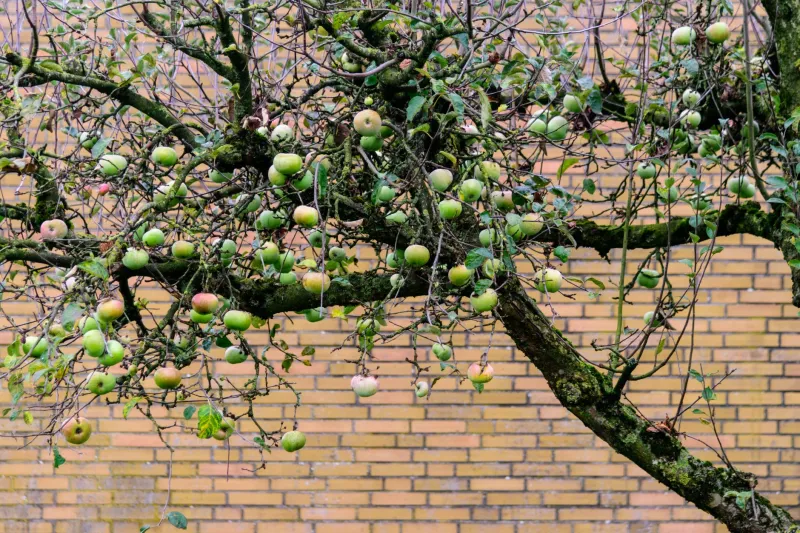
Drive through any older home orchard in the Midwest or Pacific Northwest and you'll spot trees that have gone dense and globe-shaped over the years. They look lush. They're often not very productive — or they produce fruit concentrated at the outer tips of branches, where it's small, poorly colored, and lower in flavor compounds.
The culprit is shading. When the canopy interior gets crowded, inner wood stops receiving enough sunlight to support flowering. Over time, productive wood retreats to the outer perimeter of the tree, and the interior becomes a tangle of unproductive, disease-prone growth. The tree is working hard but converting very little of that effort into edible, high-quality fruit.
The fix is what old-school orchardists call "opening up the center" — removing crossing branches, vigorous water sprouts, and any growth that's blocking light from reaching the scaffold branches below. For most home growers working with apples, cherries, or plums, you're aiming for a structure where you could theoretically toss a softball through the canopy without hitting too many branches. That's not a joke — it's a rough but useful mental benchmark.
Scaffold Branches: The Foundation You're Building For Years
If you have young trees in the ground right now, the most important pruning work you'll ever do on those trees is happening in the first three to five years. This is when you're selecting and training scaffold branches — the primary limbs that will form the tree's permanent framework.
For most standard fruit trees, you want three to five well-spaced scaffold branches distributed around the trunk at different heights, with no two directly above each other (which would cause the upper branch to shade out the lower one). Each scaffold should emerge at a wide angle and have room to develop lateral fruiting wood without competing with its neighbors.
The varieties matter here too. Columnar apple varieties like 'Northpole' or 'Scarlet Sentinel' have naturally upright habits and need less scaffold management but benefit from thinning. Spreading varieties like many peach cultivars need more attention to prevent them from developing heavy, drooping outer limbs that eventually crack under fruit load.
Renewal Pruning: Keeping Old Wood Productive
Even well-structured trees eventually develop declining productivity on older wood. This is especially pronounced in spur-bearing apples and pears, where spurs that have been fruiting for more than ten years become congested and produce progressively smaller, less nutritious fruit.
Renewal pruning addresses this by selectively removing old spur clusters and encouraging the development of new lateral growth that will eventually replace them. It's a longer-term strategy — you might be working a two- to three-year renewal cycle on different sections of the tree — but the payoff is a tree that continues producing high-quality fruit rather than slowly declining into mediocrity.
For stone fruits like peaches and plums, annual renewal is almost mandatory. Since these trees fruit on one-year wood, you need to be consistently removing two- and three-year-old laterals to make room for the new growth that will carry next season's crop.
Putting It Together: A Framework, Not a Formula
Pruning well isn't about following a rigid set of rules — it's about developing a mental model of what your specific tree needs to produce at its best. That model starts with understanding your variety's fruiting habit, recognizes how branch angle and light exposure shape productivity, and takes a long-term view of the structure you're building or maintaining.
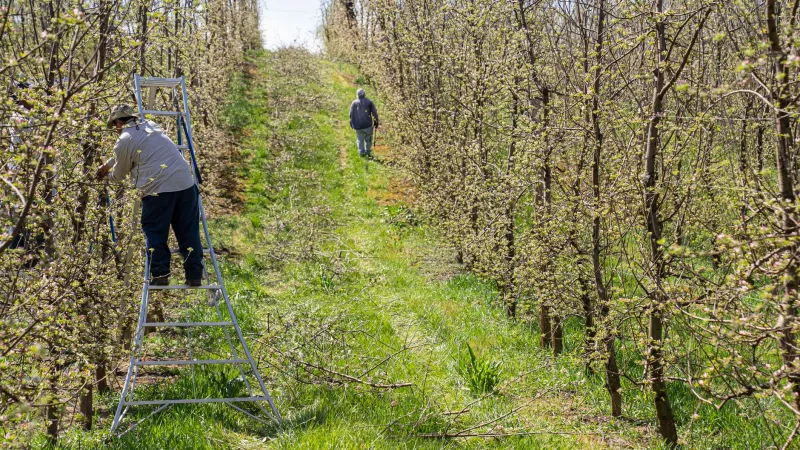
Before you pick up the shears next late winter or early spring (the ideal window for most US fruit-growing regions), spend a few minutes just looking at your tree. Where is the fruiting wood concentrated? Which branches are crossing or shading others? What does the interior look like? Are there scaffold branches that have gotten too heavy or too vertical?
The answers to those questions should drive every cut you make. Not the calendar, not a general pruning guide, not what your neighbor did with their tree. Your tree's architecture is unique — and learning to read it is one of the most valuable skills you can build as a grower.
Smart pruning isn't about cutting less or cutting more. It's about cutting with a clear picture of the harvest you're trying to build, one branch decision at a time.