Why Your Backyard Berries Are Sweeter Than Anything at the Grocery Store — The Chemistry Explains It All
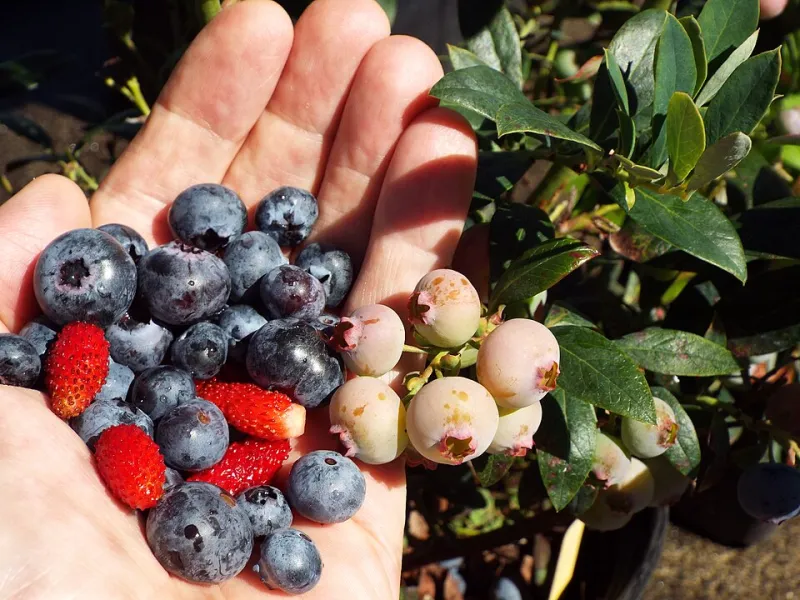
Photo: Forest and Kim Starr, CC BY 3.0 us, via Wikimedia Commons
There's a moment every summer that backyard growers know well. You pop a sun-warmed strawberry straight off the plant, and it tastes almost shockingly sweet — nothing like the pale, crunchy, vaguely flavorless things that come in a plastic clamshell from the grocery store. You know the difference is real. But have you ever wondered exactly why?
It's not nostalgia. It's not just the warmth. It's chemistry — and once you understand it, you'll never look at a store-bought berry the same way again.
The Number That Tells You How Sweet Your Fruit Actually Is
Start with Brix. It's a measurement you'll see referenced a lot in fruit growing circles, and for good reason — it's one of the most straightforward ways to quantify ripeness and sweetness in fruit.
Brix (°Bx) measures the percentage of dissolved sugars in fruit juice by weight. A reading of 10°Bx means roughly 10 grams of sugar per 100 grams of juice. The higher the Brix, the sweeter and more flavorful the fruit tends to be — though it's worth noting that Brix measures all dissolved solids, not just sucrose, so it also picks up other compounds that contribute to complexity and flavor depth.
Here's where it gets interesting for home growers. Commercial strawberries sold in US supermarkets typically measure between 6 and 8°Bx at point of sale. Well-grown backyard strawberries harvested at full ripeness? Commonly 10 to 14°Bx — sometimes higher with the right variety and soil conditions. That's not a marginal difference. That's a fundamentally different eating experience.
Blueberries tell a similar story. Store-bought highbush varieties often clock in around 10 to 12°Bx. Home-harvested berries left on the bush until they're fully ripe and slightly soft can reach 14 to 18°Bx.
So what's creating that gap?
The Harvest Timing Problem Commercial Growers Can't Escape
Commercial berry production in the US operates under constraints that have nothing to do with flavor and everything to do with logistics. Strawberries headed to a distribution center in New Jersey might be picked in California or Florida up to two weeks before they reach a consumer. Blueberries destined for a Midwest grocery chain get harvested days before peak ripeness so they survive the trip intact.
This isn't negligence — it's physics. Fully ripe berries are soft, fragile, and have a shelf life measured in days. A berry that's 90% of the way to peak ripeness is structurally firm enough to handle mechanical harvesting, packing, refrigerated transport, and time on a shelf without turning to mush.
But here's the metabolic catch: the final 10% of ripening is where most of the flavor development happens.
Starch, Sugar, and the Conversion You're Missing
In many fruits — apples and bananas are the classic examples — ripening involves a dramatic conversion of stored starch into simple sugars. Berries work a little differently. They don't store significant starch reserves the same way, but they do continue active metabolic processes right up until (and briefly after) harvest that dramatically affect sugar concentration and flavor compound development.
In the last stages of berry ripening, several things happen simultaneously. Existing sugars — primarily glucose, fructose, and sucrose — continue accumulating as the plant pumps carbohydrates from leaves into the fruit. Organic acids like citric and malic acid begin breaking down, which softens the tartness that balances sweetness in under-ripe fruit. Volatile aromatic compounds responsible for the characteristic smell and flavor of ripe berries — esters, terpenes, aldehydes — reach their peak concentrations.
When a berry is picked early, all of that stops. The fruit is severed from its sugar supply. It continues to respire (burning its own sugars for energy), which actually decreases sweetness over time rather than increasing it. A strawberry sitting in a refrigerated truck for five days isn't ripening — it's slowly consuming the sugars it already has.
Your backyard berry, by contrast, gets to finish the whole process on the plant, right up until the moment you eat it.
How to Read Ripeness Without a Refractometer
A refractometer — the handheld tool used to measure Brix — is a genuinely useful addition to any serious grower's toolkit. They're available online for $20 to $40 and work by measuring how light bends through a drop of fruit juice. Squeeze a drop onto the prism, hold it up to natural light, and read the scale. Simple, fast, and oddly satisfying.
But you don't need one to harvest at peak sweetness. Plants give you plenty of visual and tactile cues if you know what to look for.
Strawberries: Full red color all the way to the stem cap, with no white or green shoulders. The berry should yield slightly to gentle pressure but not feel mushy. At peak ripeness, strawberries almost detach themselves — a light twist and they come free cleanly.
Blueberries: Color is a starting point, but not the whole story. A blueberry that's fully blue may still be underripe. Wait until the berry has been blue for three to five days and develops a slight dusty bloom. Taste-test a few from different parts of the bush — ripe blueberries should be sweet throughout with minimal tartness.
Raspberries: These are among the easiest to read. A ripe raspberry separates from its core (the white plug) without resistance. If you have to tug, it's not ready.
Blackberries: Similar to blueberries — full black color isn't enough. A truly ripe blackberry is glossy, plump, and gives slightly when pressed. The flavor shifts from tart-forward to sweet-forward at true peak ripeness.
Timing Your Harvest to Stack the Sweetness
A few practical habits can push your Brix numbers even higher:
Harvest in the morning after a dry night. Berries are slightly more concentrated in sugars in the morning before heat and transpiration dilute their juice content. Harvesting after rain or irrigation can temporarily lower Brix as the fruit takes up water.
Don't rush the late-season berries. It's tempting to pick everything before a forecasted heat wave or storm. But berries left on the plant an extra day or two at the end of a ripening window are often your sweetest of the season — the plant has had maximum time to load them with sugars.
Let clusters ripen unevenly. On blueberry bushes especially, not every berry in a cluster ripens at the same time. Selective picking — taking only the fully ripe berries and leaving the rest — produces dramatically better flavor than stripping the whole cluster at once.
Moderate water in the final week before harvest. This is a technique borrowed from wine grape growers: slightly reducing irrigation in the week before peak ripeness concentrates sugars in the fruit. Don't stress the plant, but ease back on watering if conditions allow.
The Bigger Picture
Understanding the chemistry behind berry sweetness does more than just help you time your harvests better. It reframes the whole conversation about what "good fruit" actually means — and why the industrial model, optimized for durability and shelf life, is structurally incapable of delivering the same eating experience that a home grower can achieve with a little patience.
You're not just growing food. You're growing food at a level of ripeness that the commercial supply chain fundamentally can't replicate. That's worth understanding, worth measuring, and absolutely worth sharing with anyone who's never tasted a berry picked at the exact right moment on a warm summer morning.