What's Actually Alive Under Your Orchard — And How to Put That Knowledge to Work Before Spring
The Part of Your Soil You've Probably Been Ignoring
When most backyard growers talk about soil health, they reach for the same checklist: nitrogen, phosphorus, potassium, maybe a pH test from the local co-op. That's not wrong — those numbers matter. But they're a bit like judging a restaurant by its electricity bill. You're measuring inputs, not the thing that actually makes the food worth eating.
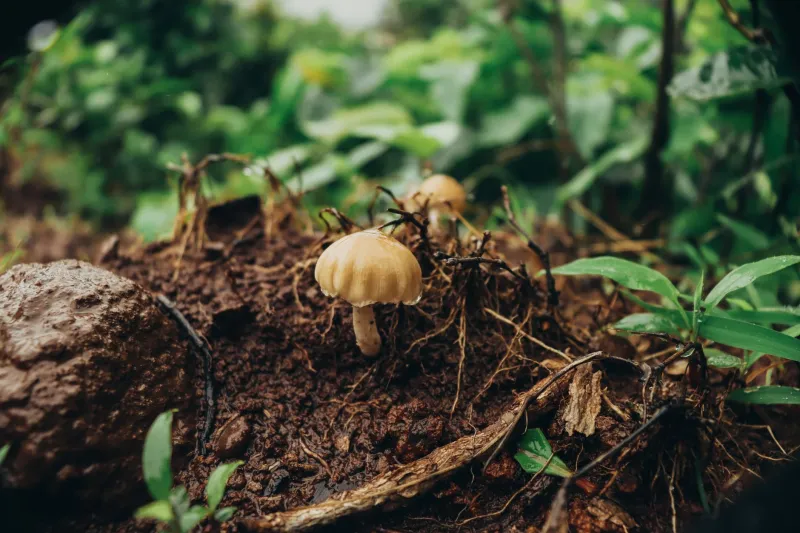
The living layer of your orchard soil — the bacteria, fungi, protozoa, and nematodes that colonize every cubic inch beneath your trees — is where the real work happens. These organisms decompose organic matter, unlock nutrients from mineral particles, suppress pathogens, and communicate with your tree's root system in ways that directly shape fruit quality, disease resistance, and yes, flavor. And most home growers have no idea what's going on down there.
That's starting to change. Affordable soil microbiome testing has come a long way in the past five years, and understanding what those results actually mean for your harvest is now a realistic goal for anyone willing to dig in — literally and figuratively.
What a Microbial Community Actually Does for Your Fruit Trees
Before we talk about how to read a microbial report, it helps to understand what you're actually rooting for.
Bacteria like Bacillus subtilis and Pseudomonas fluorescens act as frontline defenders against soil-borne pathogens — the kinds of fungal diseases that devastate stone fruit orchards across the Southeast and Midwest every season. These bacteria colonize root surfaces and essentially crowd out the bad actors before they can establish. When their populations are healthy and diverse, your trees have a living immune system working 24 hours a day.
Mycorrhizal fungi are the other major player. These organisms form a physical network with your tree's roots, extending the effective reach of the root system by sometimes hundreds of times. In exchange for sugars from the tree, they ferry water and minerals — especially phosphorus — back to the roots. Orchards with robust mycorrhizal networks tend to produce fruit with measurably higher mineral content, which translates directly to better flavor complexity and nutritional density.
Then there's the broader community of decomposers — organisms that break down leaf litter, wood chips, and compost into plant-available nutrients. The speed and efficiency of this process depends almost entirely on microbial diversity. A soil with 20 species of decomposing bacteria does the job faster and more completely than one with three.
How to Actually Sample Your Orchard Soil
Here's where a lot of growers stumble: they either skip sampling entirely or do it wrong and end up with data that doesn't reflect what's actually happening at the root zone.
For orchard microbiome testing, you want to sample from the drip line of your trees — that's the outer edge of the canopy, roughly where rain drips off the leaves. This is where feeder roots are most active and where microbial activity is most relevant to fruit production. Avoid sampling right at the trunk or out in the open lawn.
Dig down about 4 to 6 inches and collect small scoops from at least five or six spots around each tree, then combine them into a single composite sample per tree. Use clean, dry tools and avoid touching the soil with bare hands — oils and bacteria from your skin can skew results. Seal samples in the zip-lock bags that most testing services provide and get them shipped within 24 to 48 hours. Heat kills microorganisms fast, so don't leave samples in a hot car.
For US growers, services like Biome Makers, Earthfort, and Ward Laboratories now offer biological soil testing that goes well beyond the standard nutrient panel. Prices typically range from $50 to $150 per sample depending on the depth of analysis, and the turnaround is usually two to three weeks.
Reading the Report: What to Look For
When your results come back, you'll likely see a combination of microbial biomass measurements, functional group breakdowns, and sometimes species-level identification depending on the service. Here's how to translate the key numbers:
Fungal-to-bacterial ratio (F:B ratio) is one of the most useful single metrics for orchard growers. Perennial fruit trees generally prefer a soil that leans slightly fungal — an F:B ratio somewhere between 1:1 and 2:1 tends to correlate with good mycorrhizal activity and efficient nutrient cycling. A highly bacterial-dominant soil (low F:B) often signals over-tilling, heavy synthetic fertilizer use, or frequent soil disturbance — all of which suppress fungal networks.
Microbial biomass carbon gives you a sense of total microbial activity. Higher numbers generally mean more organic matter cycling and more nutrient availability. If your biomass carbon is low, it's a sign the soil food web is underfed — usually because it's not receiving enough organic inputs like mulch, compost, or cover crop residue.
Pathogen indicators — some reports flag elevated populations of Pythium, Fusarium, or other known disease organisms. These aren't automatic death sentences for your orchard, but they're early warnings. Seeing Fusarium spike in a peach block, for instance, is a good reason to start building up competitive bacterial populations before disease pressure becomes visible.
Nematode community ratios are an advanced metric but worth understanding. Beneficial nematodes that feed on bacteria and fungi help cycle nutrients; predatory nematodes keep pest populations in check. A report showing high plant-parasitic nematode populations relative to beneficial ones is a red flag — especially for shallow-rooted plants like strawberries or young apple trees.
What You Can Actually Do With This Information
Knowing your microbial profile is only useful if it changes what you do in the orchard. Here are the most practical levers you have:
Compost and wood chip mulch are the most powerful tools for shifting microbial communities toward fungal dominance. A 3- to 4-inch layer of wood chips under your trees feeds fungal networks directly and creates the cool, moist, undisturbed environment they need to thrive. This alone can dramatically improve F:B ratios over one to two seasons.
Reduce or eliminate synthetic nitrogen fertilizers. High nitrogen inputs consistently suppress fungal populations and shift soil biology toward fast-cycling bacterial dominance. If your report shows low F:B, this is often the first place to look.
Inoculate strategically. If your mycorrhizal populations are low — common in soils that have been tilled or treated with fumigants — direct inoculation at planting or during soil amendment can help re-establish these networks. Look for products that contain Glomus intraradices or Rhizophagus irregularis, which are among the most well-documented strains for fruit trees.
Add bacterial diversity through compost teas or biostimulants when pathogen pressure is elevated. These aren't miracle cures, but introducing competitive beneficial bacteria can help tip the balance before problems become visible above ground.
The Bigger Picture
A microbial report card isn't a one-time fix — it's a baseline. The most valuable thing you can do is test at the same time each year, before the growing season begins, and track how your management decisions shift the numbers over time. That's when this data stops being abstract and starts telling you a real story about your orchard.
The soil beneath your fruit trees isn't just a medium for roots to grip. It's an ecosystem that's been co-evolving with plants for hundreds of millions of years. When you learn to read it, you stop guessing and start growing with the whole system working in your favor.